

What Happens When We Stop Listening to Our Feelings?
Emotional avoidance can look like busyness, people-pleasing, anxiety, overwhelm, and burnout. Explore what happens when we disconnect from our feelings and how to start listening again.

For years, I thought not feeling was a skill. Being able to put difficult emotions to one side seemed practical, sensible, and even admirable. If something hurt, I carried on. If I felt anxious, I pushed through. If I was grieving, overwhelmed, uncertain, or angry, I told myself there would be time for that later.
Later, of course, rarely came.
It's only in recent years that I've realised how many of us are taught some version of the same lesson: that our feelings are a problem to solve rather than information to understand.
Sometimes the message is obvious.
"Toughen up."
"Don't be so sensitive."
"Stop overthinking."
"Just get on with it."
Other times it's much more subtle. We absorb it from workplaces that reward productivity over humanity. Families that don't talk about emotions. Social media feeds that celebrate resilience but rarely vulnerability. Cultures that tell us to stay positive no matter what.
Over time, many of us become experts at emotional avoidance. We stop listening to ourselves.
The Cost of Emotional Numbing
When people think about avoiding emotions, they often imagine dramatic denial or repression. But emotional numbing can look surprisingly ordinary.
It can look like staying busy.
It can look like always being the capable one.
It can look like endlessly researching solutions instead of sitting with uncertainty.
It can look like scrolling, working, tidying, planning, helping everyone else, or finding one more thing to cross off the list.
From the outside, life can appear completely fine. Inside, however, something starts to go quiet. The challenge with numbing difficult emotions is that we rarely get to choose which feelings disappear. When we turn down the volume on anxiety, grief, fear, disappointment, or anger, we often dampen joy, excitement, pride, connection, and hope too.
We don't just lose access to difficult emotions. We lose access to ourselves.
The Emotional Ailments That Often Follow
Many of the struggles people bring to coaching aren't caused by emotions themselves. They're caused by years of ignoring them.
Anxiety can become louder when we repeatedly dismiss what it might be trying to tell us.
Overwhelm can build when we override our limits for too long.
Burnout often follows prolonged periods of disconnecting from our needs.
People-pleasing can flourish when we become more attuned to everyone else's feelings than our own.
Indecision can emerge when we've lost touch with the internal signals that help us know what matters.
Even feeling lost can sometimes be a symptom of emotional disconnection.
After all, emotions are one of the ways we orient ourselves in the world. They tell us what feels safe, meaningful, threatening, exciting, important, unfair, or deeply wanted.
Without them, we can find ourselves moving through life with the map folded shut.
Why We Learn to Disconnect
Most of us don't disconnect from our feelings because we're broken. We disconnect because, at some point, it helped.
Perhaps feeling wasn't welcomed in your family.
Perhaps sensitivity was mocked.
Perhaps you learnt that achievement earned praise while vulnerability attracted criticism.
Perhaps you were carrying responsibilities that left little room for your own emotional life.
Perhaps you simply became very good at surviving.
Emotional avoidance is often an adaptation before it's a problem. The difficulty comes when a strategy that once protected us starts limiting us.
What If Feelings Aren't The Problem?
One of the biggest shifts in my own life has been moving from seeing emotions as obstacles to seeing them as information.
Not instructions. Not facts. Not something that must be acted upon immediately. But information.
Anxiety might be highlighting uncertainty.
Anger might be pointing towards a boundary.
Sadness might be asking us to acknowledge a loss.
Frustration might reveal a need that isn't being met.
Joy might show us what we want more of.
When we stop fighting our feelings, something surprising often happens. They become easier to understand. And when we understand them, we can respond rather than react.
Starting to Listen Again
You don't need to become someone who endlessly analyses every emotion. You don't need to share everything you feel. You don't need to become a different person altogether. But it can be worth becoming curious.
The next time you find yourself distracted, overwhelmed, anxious, stuck, exhausted, or disconnected, try asking:
What might I be feeling right now?
And what might that feeling be trying to tell me?
The answer may not solve everything. But it might reconnect you with the person who has been there all along, quietly trying to get your attention. And sometimes that's where finding your way starts.
Explore Emotions Coaching
If any part of this feels familiar, emotions coaching can offer a space to slow down and listen to what your feelings might be trying to tell you.
Many of us spend years pushing emotions aside, questioning them, fearing them, or simply trying to get through them. Together, we explore what's underneath anxiety, overwhelm, uncertainty, people-pleasing, burnout, and other everyday emotional struggles—not to get rid of your feelings, but to better understand them.
Because emotions aren't interruptions to life. They're part of how we find our way through it.
If you're ready to have a different relationship with what you're feeling, I'd love to help.
Find out more about emotions coaching today.
How Creativity Helps When You Feel Lost, Overwhelmed, or Disconnected
Creativity isn't just for artists. Discover how creative practices can support wellbeing, reduce overwhelm, and help you reconnect with yourself when life feels noisy or uncertain.
Sometimes the problem isn't that we don't know what to do. It's that we've heard so many voices telling us what we should do that we can no longer hear our own. The productivity experts. The wellbeing experts. The people on social media who seem to have figured it out. The friends with strong opinions. The endless stream of advice arriving through podcasts, newsletters, books, and algorithms. None of it is necessarily wrong. In fact, much of it may be thoughtful, useful, and well-intentioned. But there comes a point where all of that input can begin to drown something out.
Our own voice.
We stop noticing what we think because we're busy collecting what everyone else thinks. We stop paying attention to what we need because we're trying to keep up with what everyone else appears to need. We become disconnected. Not dramatically. Not all at once. Just gradually. A little further away from ourselves than we realise.
This was one of the themes that stayed with me from a recent conversation with Claire Venus, founder of Creatively Conscious. Although we talked about creativity, online life, burnout, visibility, trust, and self-expression, underneath all of it was a question that feels increasingly important:
How do we stay connected to ourselves in a world that is constantly competing for our attention?
The Cost of Overriding Ourselves
One of the most powerful ideas in the conversation was surprisingly simple. Claire talked about paying attention to what feels uplifting and what feels tightening. What expands us and what contracts us. What feels like ours and what feels like something we've absorbed from somewhere else.
It's easy to dismiss this as a small thing.
But many of us have become remarkably skilled at overriding those signals. We push through exhaustion. We say yes when we mean no. We follow advice that doesn't fit. We continue with projects that drain us because we've already invested so much time. We force ourselves to be consistent when what we really need is rest. Eventually, we stop asking ourselves a very important question:
How does this actually feel?
Not how it looks. Not whether it's impressive. Not whether someone else would approve.
How does it feel?
Because our bodies often know something long before our minds catch up.
Creativity Is Sometimes a Form of Reconnection
When people hear the word creativity, they often think of art: Painting. Writing. Music. Design. But creativity can be something much broader than that. It can be the act of making space for yourself again.
A notebook opened at the end of a difficult day.
A walk without headphones.
A garden.
A sketchbook.
A conversation.
A few quiet minutes spent wondering what you actually think about something.
Creativity creates room. And for people who feel overwhelmed, burnt out, anxious, or disconnected, room can be surprisingly healing. Not because it fixes everything. But because it allows us to hear ourselves again.
What If The Goal Isn't To Push Harder?
Many of us have absorbed the idea that if something isn't working, we simply need to try harder.
Be more disciplined. More productive. More consistent. More efficient.
Yet Claire challenges that idea in a way I found refreshing. She describes consistency as one of the biggest myths of modern creative life, arguing instead that what matters is understanding your own creative practice and your own rhythms.
That feels relevant far beyond creativity.
Because perhaps the question isn't:
"How do I make myself keep going?"
Perhaps the question is:
"What do I need in order to thrive?"
Those are very different questions.
One asks us to override ourselves. The other asks us to listen.
Finding Your Way Back
If you've been feeling disconnected lately, maybe the answer isn't another strategy. Maybe it isn't another expert. Maybe it isn't another thing to optimise. Maybe it's simply paying closer attention.
To what lifts you up.
To what drains you.
To what feels alive.
To what feels like yours.
Sometimes finding our way back to ourselves begins with noticing what we've stopped noticing. And perhaps that's what being creatively conscious really means. Not becoming a different person. Just becoming more aware of the one who's already here.
Listen to my full conversation with Claire Venus on A Thought I Kept: How We Stay Creatively Conscious.
And if you're feeling lost, overwhelmed, creatively stuck, or unsure what you need next, our wellbeing sessions offer space to explore what might help you reconnect with yourself. Creativity often becomes part of that conversation.

The Things We Avoid and the Things We Ache For
Avoidance isn't always laziness. Explore why we avoid difficult tasks, conversations and decisions, how emotions shape procrastination, and what our desires can teach us about what matters most.

We all have something we've been meaning to deal with.
The email we haven't opened. The text message we haven't replied to. The work project that has been sitting in the corner of our desktop for months. The difficult conversation. The bank statement. The decision.
Sometimes it can feel as though there's a monster under the bed. We suspect it's there. We can hear it scratching around in the dark. But as long as we don't look directly at it, perhaps it can't hurt us.
So we keep our heads down. We busy ourselves elsewhere. We tell ourselves we'll deal with it next week, next month, when things calm down.
But whatever it is hasn't disappeared simply because we haven't looked at it.
And often, that's where the exhaustion begins.
What Are We Really Avoiding?
The thing itself is not always the problem.
The unopened envelope might only take thirty seconds to open. The email could take five minutes to answer. The phone call might last less time than we've spent worrying about it.
What we're often avoiding is how we expect we'll feel.
Shame. Guilt. Disappointment. Regret. Anxiety. Self-doubt.
It's rarely just the task.
Many of us tell ourselves we're avoiding something because we're busy, and to be fair, that's often true. Life can feel relentless. There are school runs and deadlines, caring responsibilities and life admin, work demands and household logistics. We are trying to keep a lot of plates spinning at once.
The journalist Brigid Schulte describes modern life as being made up of "time confetti" — little scraps of time scattered throughout our days rather than long stretches of uninterrupted space. We might have five minutes here and ten minutes there, but not the emotional energy needed to climb the hill of something that feels difficult.
So we choose the easier path.
We check our phones. We reorganise the kitchen drawer. We watch another episode. We answer easier emails first.
For a moment, we feel relief.
But avoidance often comes with a hidden cost.
The thing remains. The emotional energy it requires remains. The quiet hum of guilt or dread remains.
And so we find ourselves carrying it around with us anyway.
When Avoidance Isn't About Time
Sometimes the issue isn't that something feels difficult.
Sometimes it's that it no longer matters.
We can spend months trying to motivate ourselves towards something that simply isn't aligned anymore. A commitment we've outgrown. A goal that belonged to a previous version of ourselves. A project that no longer reflects what we value.
In those moments, avoidance may not be a sign that we need more discipline. It may be information. A gentle indication that something needs revisiting, revising or perhaps even releasing.
Of course, the opposite can be true as well.
Sometimes we avoid something because it matters deeply.
The novel we want to write.
The business idea we can't stop thinking about.
The course we'd love to take.
The conversation we know we need to have.
The dream that feels so important that we become afraid to touch it.
If it stays in our imagination, it remains perfect. Once we engage with it, it becomes vulnerable to disappointment, rejection or failure.
Avoidance and fear tend to keep each other company.
What Helps When We're Stuck
One thing I've noticed is that the things I avoid often become enormous in my imagination.
The task expands. The conversation grows. The consequence becomes catastrophic.
Then I finally look at it and discover it was far smaller than I'd made it.
Not always easy. But smaller.
I've found it helpful to stop asking, "How do I finish this?" and instead ask, "What would fifteen minutes look like?"
The writer Maggie O'Farrell once spoke about writing one of the most painful scenes in Hamnet. Rather than forcing herself through it, she would write for ten minutes, walk around the garden, and then come back. Ten minutes at a time.
Sometimes courage looks less like a leap and more like a series of tiny returns.
I've also found self-compassion matters more than self-criticism. When we're already struggling with something, adding shame rarely helps. Instead, I try to remember that avoidance usually makes sense.
There is often a reason I'm hesitating. A fear. A wound. A protective instinct.
Sometimes I find it helpful to imagine speaking to myself the way I would speak to a friend:
"I know this feels difficult. I know why you're avoiding it. But we'll be okay. Let's take a look together."
Finally, I've learned to notice when avoidance moves beyond procrastination and becomes something else entirely.
There are times when avoidance can be connected to anxiety, depression, burnout or emotional overwhelm. The world becomes smaller. Opportunities narrow. Relationships drift. We stop participating in our own lives.
If that's where you find yourself, it's worth treating that experience with curiosity and care rather than judgment and getting the support that you need to help you move through this.
On the Other Side of Avoidance
On the other side of avoidance sits something else. Wanting.
Not wanting in the consumer sense. Not the endless message that we should always be striving for more.
A different kind of wanting.
The quiet question: What do I actually want?
It sounds simple, but many of us struggle to answer it.
We're often very clear on what needs doing. What is expected of us. What other people require from us.
But what do we desire? That's harder.
Perhaps because wanting can feel indulgent. We learn early that practicality is admirable. Responsibility is admirable. Self-sacrifice is admirable. Wanting can feel frivolous by comparison.
And yet some of the most meaningful parts of life begin there.
Because I want to learn a new instrument.
Because I want to travel somewhere I've never been.
Because I want to spend more time with friends.
Because I want to make things.
Because I want to.
The aviator Amelia Earhart famously answered the question of why she flew across oceans with this simple statement:
There is something wonderfully freeing about that. Not because every desire should be followed. But because sometimes wanting itself is enough..
Following the Threads of Aliveness
I've come to think of wanting as a signal. It points us towards what feels alive. Towards connection. Creativity. Curiosity. Joy. Meaning. Play.
Many of us spend so much time coping that we forget to ask what brings us pleasure.
What delights us.
What energises us.
What makes us feel more like ourselves.
And yet these questions matter. Not because they solve our problems. But because they remind us we're more than our responsibilities.
More than our productivity.
More than our to-do lists.
There is a life beyond coping.
And sometimes our longings help us find it.
What Are You Avoiding? What Are You Wanting?
Lately I've been wondering whether I'm spending more energy keeping things at bay or moving towards what matters.
Perhaps that's the question I'm leaving with you too.
What are you avoiding? And what are you wanting?
Sometimes the things we're avoiding contain important information. So do the things we're longing for.
One points towards what feels difficult, uncertain or unresolved.
The other points towards what feels meaningful, alive or true.
Neither needs to be fixed immediately. But both deserve our attention.
Explore Emotions Coaching
If you're finding yourself stuck in patterns of avoidance, overwhelmed by difficult emotions, or unsure what you want next, emotions coaching can help you slow down and make sense of what's happening beneath the surface.
Together we'll explore what you're feeling, what's driving your reactions, and how you can respond with more clarity, self-trust and choice.
Because sometimes the next step isn't about pushing harder. It's about understanding what's really going on.
Find out more about emotions coaching and book a discovery call.

A Thought I Kept… About Connection
Feeling disconnected, overwhelmed, or emotionally exhausted? Explore why human connection matters most in difficult times. Inspired by conversations from our podcast, A Thought I Kept.
There are moments when the world can feel too loud to properly hear yourself think. You wake up already behind. The news is unbearable again. Somebody somewhere is shouting online. The food shop costs more than you thought it would. Your phone keeps filling with reminders, requests, headlines, notifications. Work spills into evenings. Even rest starts to feel strangely performative. We scroll instead of pausing. We cancel plans because we’re tired. We tell ourselves we’ll reply properly tomorrow.
And slowly, often without noticing, many of us begin retreating from one another. Not dramatically. Quietly.
We stop reaching out first. We stay home more. We become suspicious of people who think differently to us. We compare ourselves. We convince ourselves everyone else is coping better. We move through life slightly armoured — overstimulated, emotionally exhausted, and unsure how to find our way back to each other again.
But one of the thoughts I’ve kept from making A Thought I Kept is this: human connection matters most precisely in the moments when we’re tempted to withdraw from it.
Not because connection fixes everything. Not because friendship erases grief or anxiety or burnout or uncertainty. But because being with other people — really being with them — can remind us that we are still here. Still human. Still part of something larger than our own spiralling thoughts.
As I pulled together conversations with Cathy Rentzenbrink, Tanya Lynch, Hiroko Yoda, Laurence McCahill, Suzy Reading, Liana Fricker and Lauren Barber, I realised that although these episodes explored very different corners of life — grief, spirituality, creativity, burnout, friendship, books, business, midlife, rest — they kept circling back to the same idea. Connection is not an optional extra to wellbeing. It might be the thing holding so much of it together.
1. We Retreat When Overwhelmed But Isolation Deepens the Feeling
One of the strange things about difficult periods is how quickly they can make us disappear from our own lives. You stop texting back properly. You feel too tired to explain how you are. Going out starts to feel like effort. You tell yourself you’ll reconnect when you feel calmer, less overwhelmed, more yourself again.
But listening back to these conversations, I kept noticing how often people found their way back through other people. Not through becoming shinier or more productive or more emotionally “together,” but through being alongside somebody else long enough to soften a little.
In my conversation with Laurence McCahill, we talked about how growth and change so rarely happen in isolation. We can read the books and underline the quotes and listen to the podcasts and still feel strangely stuck. Sometimes what’s missing isn’t another idea. It’s other people. Someone sitting opposite you saying, “Yes, I know exactly what you mean.” A room where you don’t have to explain yourself quite so much. A gathering that reminds you life can feel different to this.
I think modern wellbeing culture sometimes forgets this. So much advice is aimed at the individual: your morning routine, your mindset, your habits, your healing, your optimisation. And while solitude can absolutely be restorative, there is also something profoundly regulating about being witnessed by another human being. The friend you voice note while unloading the dishwasher. The person who notices you’ve gone quiet. The neighbour you always end up chatting to longer than intended. The group chat that suddenly becomes honest at 11pm. These moments can seem tiny from the outside, but emotionally they can be enormous.
2. Connection Doesn’t Have to Look Big or Impressive
What struck me listening back to these episodes was how often connection appeared in ordinary forms. Not grand gestures or perfectly curated social lives, but cups of tea, shared books, walks, retreats, conversations that drift unexpectedly from logistics into longing.
In my conversation with Tanya Lynch, we spoke about the feeling of being gathered — of spaces where people are allowed to arrive exactly as they are, whether that’s hopeful or grieving or emotionally threadbare. There was something in that conversation that stayed with me because I think so many of us are craving precisely that kind of space right now. Not networking. Not performance. Just moments where we can stop pretending to be fine for a minute.
I think many of us accidentally make connection feel harder than it needs to be. We imagine thriving social lives and elaborate dinner parties and huge friendship circles maintained through impeccable emotional availability and perfectly colour-coded calendars. But often connection is much quieter than that. It’s somebody saving you a seat. Somebody remembering what you said last week. Somebody sending you a photo because it made them think of you.
These tiny gestures matter because they remind us we exist in other people’s minds and lives. That we are held somewhere beyond our own stress and self-criticism.
3. Being Witnessed Changes Us
There’s a moment in my conversation with Cathy Rentzenbrink where we talk about books and grief and the relief of feeling recognised by somebody else’s words. I think that’s one of the deepest forms of connection there is: the feeling that someone else has inhabited something adjacent to your own experience and survived long enough to describe it.
Loneliness is not only physical isolation. It’s also the feeling that your inner world is somehow unshareable, too strange or messy or contradictory to be understood by anyone else. Which is why it can feel so unexpectedly emotional when somebody articulates the thing you haven’t been able to say yourself.
This is part of why art matters so much to me. Why conversations matter. Why podcasts matter. Why books matter. Not because they solve life, but because they make our inner worlds feel more shareable. Somebody else has also sat in the car park crying. Somebody else has also felt lost at a dinner party or uncertain in midlife or disconnected from themselves after years of coping. Somebody else has also stared at the ceiling at 3am wondering what on earth they’re doing with their life.
Being witnessed doesn’t remove pain, but it can make pain feel survivable. Sometimes another person’s honesty becomes a bridge back to our own.
4. Rituals and Shared Experiences Help Us Feel Human Again
I kept thinking about this during my conversation with Hiroko Yoda, where we explored Japanese spirituality and the way it can live quietly inside ordinary rituals and everyday life. Shared meals. Seasonal practices. Returning to certain places. Moments of pause and reverence that tether people back to each other and to the world around them.
It made me realise how many of us are quietly searching not only for connection with other people, but connection with meaning itself. Something beyond productivity and algorithms and constant consumption. Something that helps us feel part of a wider human experience again.
Maybe this is why small rituals can feel so unexpectedly important during difficult seasons. Cooking for somebody. Reading in bed beside another person. Returning to the same café every Saturday morning. Listening to a familiar voice on a podcast while commuting home in the dark. These things can seem insignificant until you realise they are helping hold you together.
There’s comfort in repetition. In familiarity. In tiny practices that remind us we belong somewhere — to a person, a community, a season, a place, a version of ourselves we’re trying not to lose.
5. Other People Help Us Remember Who We Are
Perhaps this is the thought I’ve kept most strongly from these conversations: we do not become ourselves entirely alone.
Other people reflect us back to ourselves all the time. A friend remembers the version of you that existed before burnout. Someone notices your excitement returning before you do. A conversation unlocks a part of yourself you thought had disappeared. A community helps you imagine a different future.
We are constantly shaped by what we share, what we witness, and what we allow ourselves to receive from one another. Which feels particularly important in a culture that simultaneously encourages hyper-independence while exhausting us emotionally.
Maybe wellbeing was never supposed to be something we carry entirely alone. Maybe part of feeling better is allowing ourselves to be held — by conversations, friendships, rituals, stories, books, communities, shared meals, and moments of recognition that arrive unexpectedly in ordinary life.
Putting together this playlist reminded me that connection rarely arrives looking cinematic. More often it appears quietly. A message sent at the right moment. A conversation that stays with you for weeks afterwards. Somebody making you laugh when everything has felt unbearably heavy. A voice in your headphones helping you feel a little less alone as you move through another complicated Tuesday.
And maybe, for now at least, that’s enough.
If you’d like to listen to the full A Thought I Kept… About Connection playlist, you can find it here:
Connecting While Human
When something shifts in your relationships, it can feel confusing and lonely. This piece explores how to stay connected while being yourself, even when it’s messy.
You’re halfway through a conversation and realise you’re not really in it. You’re nodding, saying the right things, keeping the tone light enough, agreeable enough. You hear yourself laugh at something that isn’t quite funny. You offer an explanation you’ve offered before, one that lands just well enough to move things on. And at the same time, there’s something else happening underneath — a more insistent feeling that says: this isn’t quite it.
You might notice it later, when you’re walking home or making dinner, replaying the conversation in your head. The bit you didn’t say. The way you softened something. The way you tried, once again, to explain yourself into being understood. And then, almost reluctantly, the thought arrives: I don’t think this is about explaining anymore.
It’s a subtle shift, but once it’s there, it tends to stay.
This is the place Jacky Power and I found ourselves in during our conversation — not just the moment of clarity that so many wellbeing conversations promise, but in what comes just after it. The part where you realise something about yourself or your relationships, and then very messily try to do something about it.
Jacky described believing, for a long time, that if she could just say things the right way, people would meet her there. That the gap between her and others was something she could bridge with better words, more careful explanations, a little more effort. It’s such a human instinct — to assume that understanding is something we can earn if we try hard enough.
And sometimes that’s true. But not always.
Sometimes what we’re up against isn’t a lack of clarity, but a difference in direction. A difference in how we see things, what we value, what we’re willing to hold or not hold anymore. And that’s much harder to resolve, because it doesn’t bend as easily.
What follows that realisation isn’t a clean decision. It’s more like learning to walk again on uneven ground.
You say something you’ve been meaning to say, and it comes out slightly wrong. Or it lands in a way you didn’t expect. You question yourself almost immediately. Was that too much? Too blunt? Not quite right? You tell yourself you’ll try again next time, maybe in a softer way, a clearer way. You adjust, you retreat, you step forward again.
Jacky described it as “stumble, trip, stumble, trip.” And it’s exactly that. Not a confident stride into a new way of being, but a series of attempts, some of which don’t go to plan.
There’s a kind of vulnerability in this stage that doesn’t get talked about much. Because from the outside, it might look like growth — becoming more self-aware, more aligned, more boundaried. But from the inside, it can feel uncertain and exposing. You’re no longer fully comfortable in the old way of relating, but you’re not yet steady in the new one either.
And that can feel lonely.
Not necessarily in the obvious sense of being alone, but in the quieter sense of not quite being met. Of noticing that the ways you’re beginning to show up don’t always fit neatly into the relationships you’ve had before. Of realising that not everyone will come with you, or understand you in the way you hoped.
Jacky spoke about this without dressing it up. That there can be grief in it. That choosing your own direction — even gently, even kindly — can create a kind of separation. Not because you want it to, but because something has shifted, and you can’t quite go back to not knowing that.
And still, there was something else in what she said that felt just as important.
That the alternative — ignoring what you’ve noticed, continuing to override yourself for the sake of keeping things smooth — comes at a cost too. A quieter one, perhaps, but one that builds over time. A sense of being slightly out of step with yourself. Of saying yes when you mean maybe, or maybe when you mean no. Of slowly losing touch with what feels true.
This is where connection becomes more complicated than we often allow it to be.
Because it isn’t just about being close to other people. It’s also about how close you are to yourself within those relationships. Whether there is space, even in small ways, to be honest about what you feel, what you need, what you see differently now.
And that honesty doesn’t have to arrive all at once.
One of the things I took from this conversation is that connection doesn’t depend on getting it perfectly right. It might be something much smaller than that. A moment where you say a little more than you usually would. A conversation where you don’t immediately tidy up your feelings. A pause where you notice the urge to explain, and choose, just for a second, not to.
It might be noticing where you feel able to do that, and where you don’t.
Because not every space will hold it. And that, too, is information.
Jacky talks about “human tricky things” — the parts of being alive that don’t resolve easily. The feelings we don’t always have words for. The experiences that sit somewhere between connection and disconnection, between being seen and staying hidden. And what struck me is that learning to connect while human isn’t about smoothing those things out. It’s about finding ways to stay with them.
To stay with yourself when you’re unsure. To stay in relationship where you can, without forcing it where you can’t. To allow for the possibility that connection might look different now — less about being perfectly understood, and more about being real in the places that can hold it.
If you’re in that space at the moment — noticing something has shifted, but not yet sure how to live it — it might help to know that this part doesn’t need to be rushed.
You’re not behind. You’re not getting it wrong. You’re in the middle of learning something about yourself that takes time to settle.
And there is a kind of steadiness that can grow here, even if it doesn’t feel like it yet. Not from having all the answers, but from beginning to trust what you notice. From allowing that to matter, even when it complicates things.
If you’d like to hear more of this conversation, you can listen to my episode with Jacky Power on A Thought I Kept, where we explore emotions, loneliness, and what it means to stay connected — to ourselves and to each other.
And if you’re looking for somewhere to think about your own relationships or feelings a little more gently, explore our coaching and resources here If Lost Start Here.

“I’m Fine” in Midlife
In midlife, “I’m fine” can mask burnout, hormonal shifts, and emotional overload. Explore why this response changes and how to reconnect with what you really need.

You wake before the alarm, not because you’re rested but because your mind has already started. There’s a list forming before your eyes are fully open — things to organise, respond to, remember, hold together. The day begins before you’ve even stepped into it.
By mid-morning you’ve answered messages, kept something running that might otherwise have stalled, smoothed over a moment that could have turned into conflict, and made sure everyone else is more or less where they need to be. When someone asks how you are — and they do, in passing, in between everything else — you say, “I’m fine,” and keep moving.
And in many ways, you are. You’re functioning. You’re managing. You’re doing what needs to be done. But somewhere underneath that, something feels different to how it once did.
The pace is the same, or even faster, but your capacity to keep absorbing it without cost has shifted. Sleep doesn’t restore you in quite the same way. Small things feel harder. Your body speaks more loudly, even if you’re not always sure how to listen. Emotions can feel closer to the surface — or, at times, more difficult to access altogether. And yet, the expectation — internal as much as external — is often that you should still be able to carry it all.
This is where “I’m fine” in midlife can take on a particular weight. It becomes the thing that holds together a life that has grown fuller and more complex over time — work, relationships, children, parents, friendships, the quiet accumulation of responsibility, the invisible labour that sits beneath it all.
It can also hold together an identity that has been built over years. If you’ve been the capable one, the one who gets things done, the one who can be relied on, then not being fine can feel like more than just a feeling — it can feel like a fracture in who you are. So “fine” keeps you inside something familiar, even if it’s starting to feel tight.
At the same time, midlife brings its own particular pressures.
Changes in the body — hormonal shifts, disrupted sleep, anxiety that arrives without clear reason, irritability that feels out of proportion.
Changes in relationships — renegotiations, distance, new dynamics that require different conversations.
Changes in perspective — a growing awareness of time, of what has been, of what might still be possible.
And alongside all of that, a question that can be hard to ignore:
Is this still working for me?
“Fine” often steps in right at that point.
Not because nothing is there, but because what’s there feels too big, too layered, or too disruptive to fully open. It protects you from the immensity of it — grief for versions of life that didn’t happen, anger at loads that feel uneven, fear of what change might bring, longing for something more spacious or more aligned. It also protects your nervous system when things have been too much for too long.
So instead of anxiety, you might feel a kind of flatness. A functional steadiness that keeps everything moving, but leaves little room for rest, pleasure, or connection.
You can cope, but you can’t receive.
You’re productive, but not nourished.
You’re calm on the outside, but internally braced.
And over time, that can begin to feel like the place you live.
But midlife also has a way of gently interrupting that pattern. Not necessarily with a dramatic breaking point, but with a steady accumulation of moments where “fine” no longer quite fits.
Where your body asks for something different.
Where your capacity reaches a limit.
Where your desires, long held at the edges, become harder to ignore.
And this is where something else becomes possible. Not a complete reinvention, and not a rejection of everything that has brought you here, but a gradual renegotiation.
Of what you carry.
Of what you expect of yourself.
Of what you allow yourself to need.
Questions begin to surface that cut through the automatic nature of “fine”:
What am I responsible for that I shouldn’t be?
What expectations am I meeting that no one has actually asked of me?
Where have I become the only one holding something together?
What would change if I believed my needs were legitimate?
These aren’t questions to answer all at once. They’re invitations. Because “fine” in this season of life isn’t something to get rid of. It’s something to listen to. A signal that something is asking for attention, for care, for adjustment. And alongside it, there can be another version of fine — one that feels different in the body. A steadier kind of okay.
Where your mood is mostly stable, even if life is full.
Where problems feel solvable, and support feels possible.
Where you have access, even in small ways, to rest, to pleasure, to connection.
Where your yes and your no feel real.
Midlife doesn’t remove the need for “fine.” But it does offer the chance to reshape it. To let it become less about holding everything together, and more about being in relationship with yourself as you actually are — changing, adjusting, becoming.
And from there, something opens. Not all at once. But enough to feel the difference between coping… and being here, in your life, with a little more space to breathe.
Identify the hidden emotion under “fine”
Common ones in midlife:
Grief (for time, body, dreams, parents, versions of self)
Anger (from unfair load, invisibility, broken agreements)
Fear (change, aging, being alone, being trapped)
Longing (for rest, intimacy, freedom, meaning)
Shame (for needing, for not coping “better”)
Prompt:
If ‘fine’ had a feeling, it would be?.
If ‘fine’ had a message, it would be?
Find the right kind of support
If it’s hormonal/body-based: track symptoms, consider talking to a clinician, consider sleep support and nutrition.
If it’s relational: practice direct asks, therapy/couples work, boundary setting.
If it’s nervous-system burnout: prioritize downshifting (rest, somatic work, less stimulation).
If it’s meaning/identity: coaching/therapy/journaling around values and your “next chapter.”
How to talk to people when you’re FINE
Scripts to try out:
“I’m a bit depleted. I don’t need fixing, just you to listen.”
“I’m not ready to talk details, but I’m not okay.”
“Can we do a low-energy hang? I need company.”
“I’m overwhelmed. Can you take one thing off my plate this week?”
“I’m not fine, but I’m ok.”
If “fine” has become the place you’re living from more often than you’d like, this might be a moment to have a different kind of conversation.
In coaching, we explore what’s shifting in this season of life — your needs, your energy, your direction — so you can move forward in a way that feels more sustainable and more yours.
Book a free discovery call and begin to find your way from here.

What Is Emotional Fragmentation? How to Spot It and Start Healing
Emotional fragmentation can look like being articulate but emotionally disconnected. Learn what it is, how it forms, and small, embodied ways to begin reconnecting with your emotional life.
You can talk about your emotions. You might even do it brilliantly. But when someone asks how you feel, there’s a pause. A quick internal scan… then a neat answer. The right words. Not the felt experience.
This is emotional fragmentation.
It’s not about being broken—it’s about being disconnected. From the felt, embodied experience of your own emotions. Noticing this pattern is the first step toward something more integrated, more whole.

When Talking About Emotions Isn’t the Same as Feeling Them
For a long time, I would have described myself as an emotional person. I could talk about feelings with fluency—mine, yours, fictional characters’—with nuance and detail. But somewhere in my 40s, I realised something new. I wasn’t actually feeling those emotions. Not in my body. Not really.
I’d say “I’m feeling anxious” while my body remained in neutral. I’d discuss heartbreak with all the right language but none of the actual ache. I was, it turns out, managing emotions from a safe cognitive distance. Naming them, analysing them, talking about them but not letting them land.
Emotional fragmentation often shows up like this:
You can describe emotions, but you rarely feel them.
You feel detached from your own reactions, like you’re watching them through glass.
You judge yourself (and others) for being "too emotional."
You feel overwhelmed when multiple emotions appear at once.
It’s a form of self-protection. Often developed early, in environments where feelings weren’t safe, welcomed, or attuned to. Over time, your body learns: Feelings are too much. Think instead. And so you become a master of emotional language, but a stranger to your emotional landscape.
What Happens When We Don’t Feel What We Know
Why does this matter? Because emotions are not just thoughts. They’re not just moods or concepts. Emotions live in your body. They are sensory, energetic experiences designed to move through you. To guide you, inform you, protect you, and connect you to others.
When emotions are kept at a distance—intellectualised but not embodied—they don’t go away. They get stuck. They pile up. And they often show up later as confusion, overwhelm, low-level anxiety, fatigue, or shutdown.
You can be emotionally articulate and emotionally distanced at the same time.
How to Gently Reconnect With What You Feel
So how do you begin to shift from fragmentation to connection?
Not with force. Not by “feeling harder.” But by gently rebuilding the bridge between your emotions and your body. Here are a few practices to try:
1. Ask your body, not just your mind
The next time you notice an emotion, pause and ask:
Where do I feel this in my body?
What sensation is here—tightness, heat, hollowness?
Can I stay with it for a few breaths, without needing to fix it?
2. Feelings first, labels later
Instead of rushing to name the feeling, start by noticing it. Is it heavy? Sharp? Expansive? Let the body lead; let the words come later.
3. Try micro-movements
Shake your hands. Stretch. Rock. Sometimes the body knows how to move emotion through, even if you don’t know why you’re feeling it. Movement invites release.
4. Be curious, not correct
You don’t need to get it right. You’re not looking for perfect self-awareness—you’re practicing presence. Emotionally fragmented people often value precision; try valuing curiosity instead.
5. Replace "I am" with "I'm feeling"
Instead of “I am angry,” try “I’m feeling anger right now.” It’s a subtle shift, but one that reminds your nervous system: this is an experience, not an identity.
Does this sound like you? Or someone you love?
You’re not cold. You’re not broken. You’re just used to living with your emotions at arm’s length—and maybe, now, you’re ready to bring them closer.
When the Story You’re Living No Longer Feels Like Yours
Sometimes life looks fine on the outside, but something feels off. Explore what self-trust can look like and what it means when the story you’re living no longer fits — and how to find your footing again.
You might be standing in the kitchen, making packed lunches. Nothing dramatic is happening. No argument. No crisis. Just the familiar rhythm of the morning — coffee cooling on the side, toast popping up, your phone lighting up with emails you already feel behind on.
You might catch yourself thinking, I’m good at this. At holding things together. At anticipating what everyone else might need. At getting through the day without making too much noise. And then, almost immediately, another thought follows: But I don’t remember choosing this version of myself.
It’s not that you dislike your life. You’re capable, loved, respected. From the outside, things look fine. But there’s a growing sense that you’re performing a role you’ve learned very well — one shaped by expectation, responsibility, and what once felt necessary — rather than living from a place that feels true to you now.
When you try to put words to it, they’re hard to find. You don’t want to sound ungrateful. You don’t want to blow things up. You just know that something about the story you’re carrying feels outdated, like clothing that once fit perfectly but now restricts your movement in small, tiring ways.
This is often how it begins. Not with a bold decision or a clear turning point, but with a quiet noticing. A moment where the life you’re living feels slightly misaligned with the person you’re becoming. Where the way you’re seen — dependable, easy-going, capable — no longer matches how you feel on the inside.
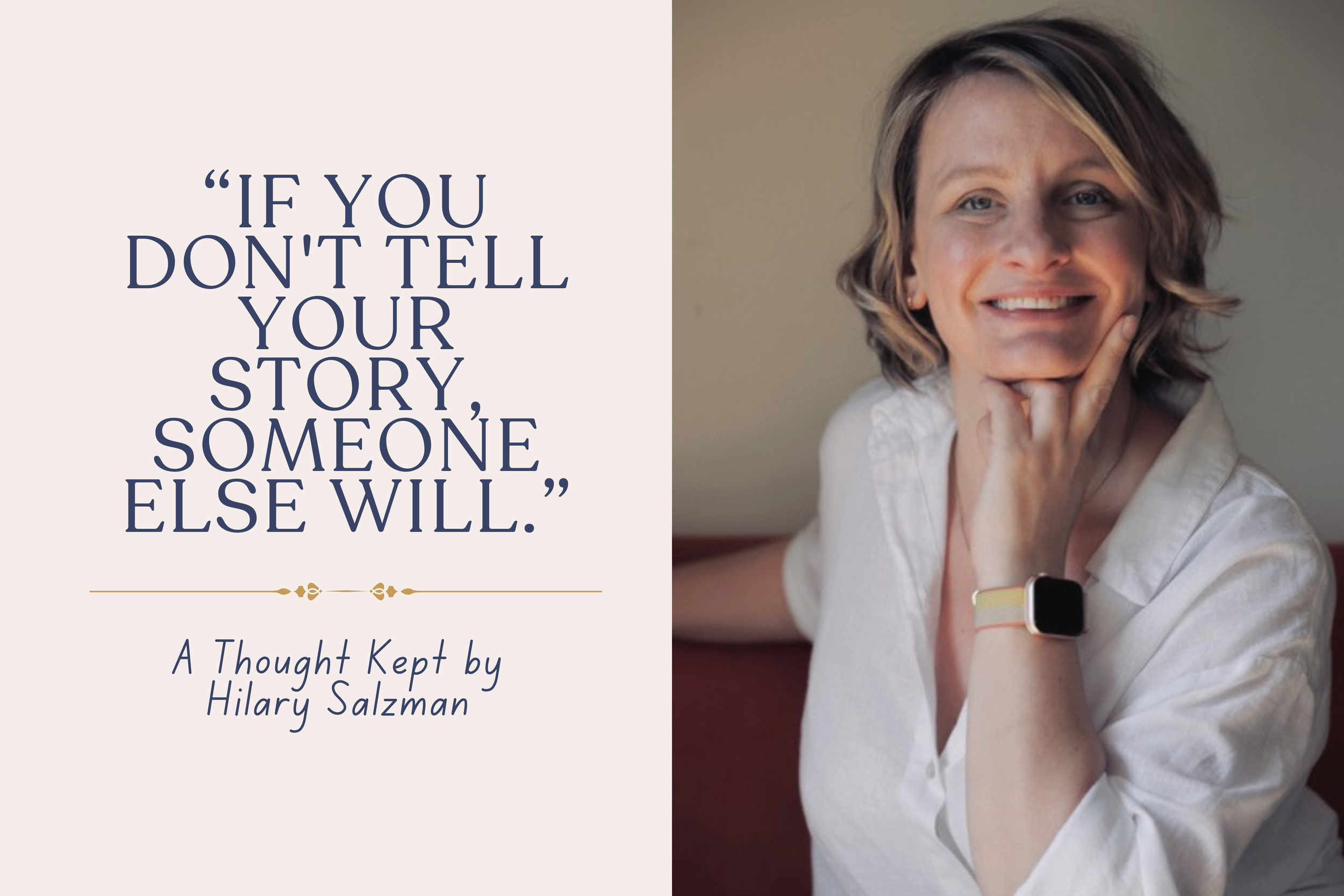
I’ve been thinking about this a lot since my recent conversation on A Thought I Kept with Hilary Salzman. We talked about storytelling, voice, and self-trust — not as something polished or performative, but as something deeply everyday. The stories we absorb, repeat, and live inside, often without realising we’re doing it.
Hilary shared a thought that has stayed with her for years: if you don’t tell your story, someone else will. It isn’t a warning or a call to action. It’s more like a lens — a way of noticing what happens when we stop authoring our own lives and allow habit, expectation, or other people’s assumptions to fill in the gaps.
Most of us aren’t consciously choosing to live someone else’s story. It happens gradually. We adapt. We respond. We take on roles that make us legible and useful. We learn how to be good — good at work, good in relationships, good at coping. And for a long time, those stories can be protective. They help us belong. They help us get through.
But protection can quietly turn into distance. From ourselves. From our feelings. From the sense of aliveness that comes from knowing why we’re doing what we’re doing.
In the conversation, Hilary spoke about the discomfort that arises when the way the world sees you no longer matches how you see yourself. That mismatch can show up as anxiety, restlessness, or a low-level dissatisfaction that’s hard to explain. You might feel unsettled or unsure, even though nothing is obviously “wrong”.
What stays with me is how rarely this is about needing a better plan or a more confident version of yourself. More often, it’s about noticing. Becoming curious about the stories you’re living inside. Asking gentle questions, not to fix or optimise, but to understand.
Whose expectations am I carrying here?
What version of myself am I maintaining?
What would it mean to tell this story in my own words?
We live in a culture that treats uncertainty as something to overcome — as though clarity must arrive quickly, and confidence comes from having answers. But what if uncertainty is simply information? A sign that something is shifting. A signal that the story you’ve been living has reached its limits.
Hilary talked about how clarity often doesn’t arrive as an answer, but as a feeling in the body — a sense of constriction or ease. A quiet knowing that something no longer fits. And noticing this doesn’t require dramatic change or brave declarations. It can begin by allowing yourself to feel what’s already there, without rushing to make sense of it.
This is where self-trust comes in — not as confidence or self-belief in the motivational sense, but as a willingness to stay present with your own experience. To let your emotions inform you rather than embarrass you. To trust that discomfort isn’t a personal failure, but a reasonable response to living inside a story that’s outgrown its usefulness.
Many people arrive at If Lost Start Here feeling overwhelmed, behind, or unsure why familiar wellbeing advice isn’t helping. Often, that’s because what’s needed isn’t another strategy, but orientation. A way of standing still long enough to feel where you are, and what might be asking for attention.
Living your own story doesn’t mean having a perfectly articulated narrative. It doesn’t require sharing everything or knowing exactly who you are becoming. It’s less about broadcasting and more about authorship — about being able to come back to yourself and say, this is who I am, for now. This is what matters. This is what I’m no longer willing to override.
The stories we tell ourselves shape our nervous systems, our relationships, our sense of belonging. When those stories are borrowed, inherited, or outdated, it makes sense that we feel unsettled. And when we begin to gently reclaim them — not by rewriting our lives overnight, but by listening more closely — something steadies.
You don’t need to force a new story into existence. You don’t need to perform authenticity or prove your voice. Sometimes it’s enough to notice the gap. To recognise the feeling of misalignment without judging it. To stay curious about what’s trying to emerge.
If this resonates, you might want to listen to the full conversation with Hilary on A Thought I Kept. It’s a thoughtful exploration of voice, identity, and what it means to feel more at home in your own life.
And if you’re in a season of questioning — unsure, overwhelmed, or quietly ready for something to shift — there’s support here too. Not to fix you, but to help you find your footing, in your own time, and in your own words.
You’re allowed to pause. You’re allowed to question the story you’re in. And you’re allowed to take your time deciding what comes next.
When No One Is Coming to Save You: Finding Self-Trust in Midlife
Often we can feel lost in midlife without knowing why. This week we’re exploring self-trust, confidence, and what might be keeping you stuck.
Sometimes feeling lost doesn’t look as dramatic as we think it might.
Rather it looks like getting through the day, doing what needs to be done, being relied on — and still having a sense that you’re not quite where you thought you’d be. Or that life feels oddly paused, even though everything is moving. You might not be unhappy, exactly. Just a little unheld. A little disconnected from yourself.
I notice this often when I talk to women in midlife. There’s competence there. So much experience. Caring for everyone and everything. And underneath it all, a feeling that something is meant to shift but absolutely no clear sense of how or when.
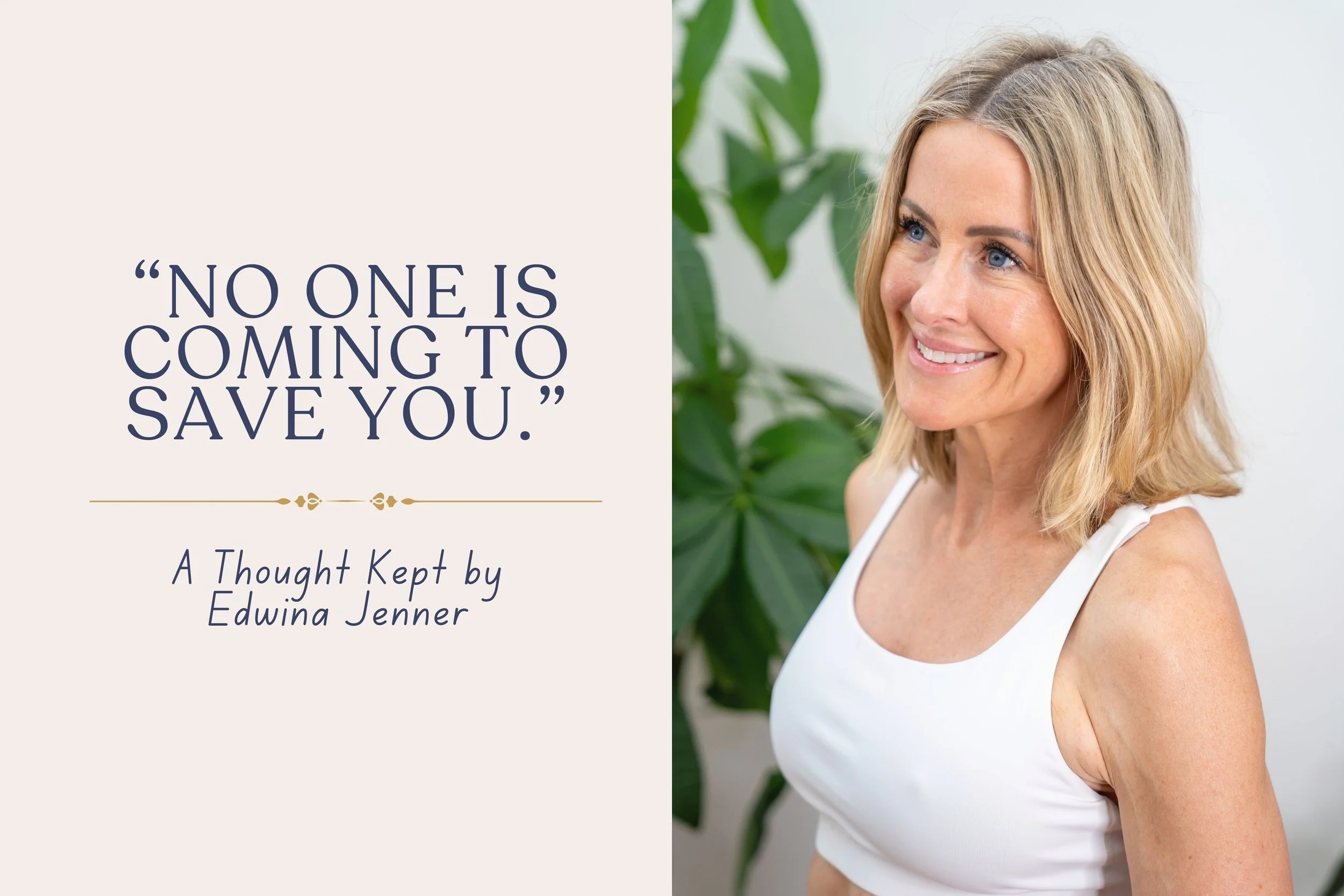
That feeling came up strongly for me in a recent conversation on A Thought I Kept with Edwina Jenner. As we talked, Edwina shared an idea that had stopped her in her tracks because it named something she hadn’t realised she was carrying.
The sense that, quietly, she had been waiting.
Waiting for things to feel easier. Waiting for confidence to arrive. Waiting for someone — or something — to step in and make life feel more manageable, more certain, more settled.
When she finally noticed that belief, it wasn’t crushing. It was clarifying.
Because alongside it came another realisation: no one else was coming to save her. She already had more agency than she’d been giving herself credit for.
Many of us arrive here having spent years responding to what’s needed — children, work, relationships, family, emotional labour. We learn to be capable. Reliable. Adaptable. And somewhere along the way, it can become easy to lose touch with our own pull. Not what’s expected of us, but what matters now.
Waiting can feel sensible. Responsible. Even kind. We tell ourselves we’ll come back to ourselves when things calm down. When there’s more space. When we feel more confident. When life gives us a clearer signal. But often, that signal never arrives.
Instead, what we notice are small signs of disconnection. Putting off caring for our bodies because we’re tired. Dismissing creative ideas because they feel indulgent. Ignoring rest, curiosity, or desire because other things seem more important.
In the conversation, Edwina spoke about strength, not as something performative or punishing, but as something built slowly, through attention and consistency. She talked about learning to trust herself again by doing what she said she would do. By listening to what pulled her, even when it felt uncomfortable. By recognising that motivation comes and goes, but self-trust is built through action.
What struck me most was how impactful this actually was.
Believing that no one is coming to save you doesn’t have to mean doing everything alone. It doesn’t mean hardening yourself or becoming self-sufficient at all costs. It can mean releasing an expectation that has unconsciously kept you waiting and turning back toward yourself instead.
There can be a kind of relief in that. Relief in realising you don’t need to become someone else to move forward. You don’t need a dramatic overhaul or a better version of yourself. You need permission to take yourself seriously. To listen more closely to what your body, your energy, and your inner life are already telling you.
When self-trust begins to rebuild, it rarely announces itself loudly. It shows up in small decisions. In boundaries that feel steadier. In caring for your body not as a project, but as a relationship. In choosing what supports you, even when it doesn’t look impressive from the outside.
If you’re feeling lost right now, it might not be because you’re “behind” or “broken”. It might be because you’re between ways of being. No longer able to live on autopilot, but not yet clear about what comes next.
That in-between can feel uncomfortable. But it’s also where attention returns. Where curiosity starts to replace pressure. Where you begin to notice that you already know more than you think.
At If Lost Start Here, we don’t believe that confidence or wellbeing come from fixing yourself or forcing change. They come from reconnecting — slowly and openly — with what matters to you now. From trusting that the things pulling at you are worth listening to.
If this resonates, you might like to listen to the full conversation with Edwina on A Thought I Kept.
And if midlife feels like a threshold you’re standing in — unsure, but ready for something to change — we’ve created a great resource to support that moment.
You can download our free midlife resource here.
How to Handle Your Emotions When You’re Feeling Lost or Overwhelmed
Feeling lost or overwhelmed by your feelings? Learn how to handle your emotions when you struggle to understand them.
There’s a moment many of us might recognise.
You’re trying to make a decision, move something forward, or simply get through the day — and your emotions feel louder than you’d like them to be. Anxiety edges in. Frustration bubbles up. Self-doubt has an opinion. And suddenly it feels harder to think clearly, trust yourself, or know what the next step might be.
When that happens, it’s easy to conclude that the problem is your emotions. That you’re feeling too much, or handling things badly. That if you could just calm down, be more confident, or stop overthinking, everything would be easier.
But what if the issue isn’t having emotions — it’s that most of us were never taught how to handle them well?
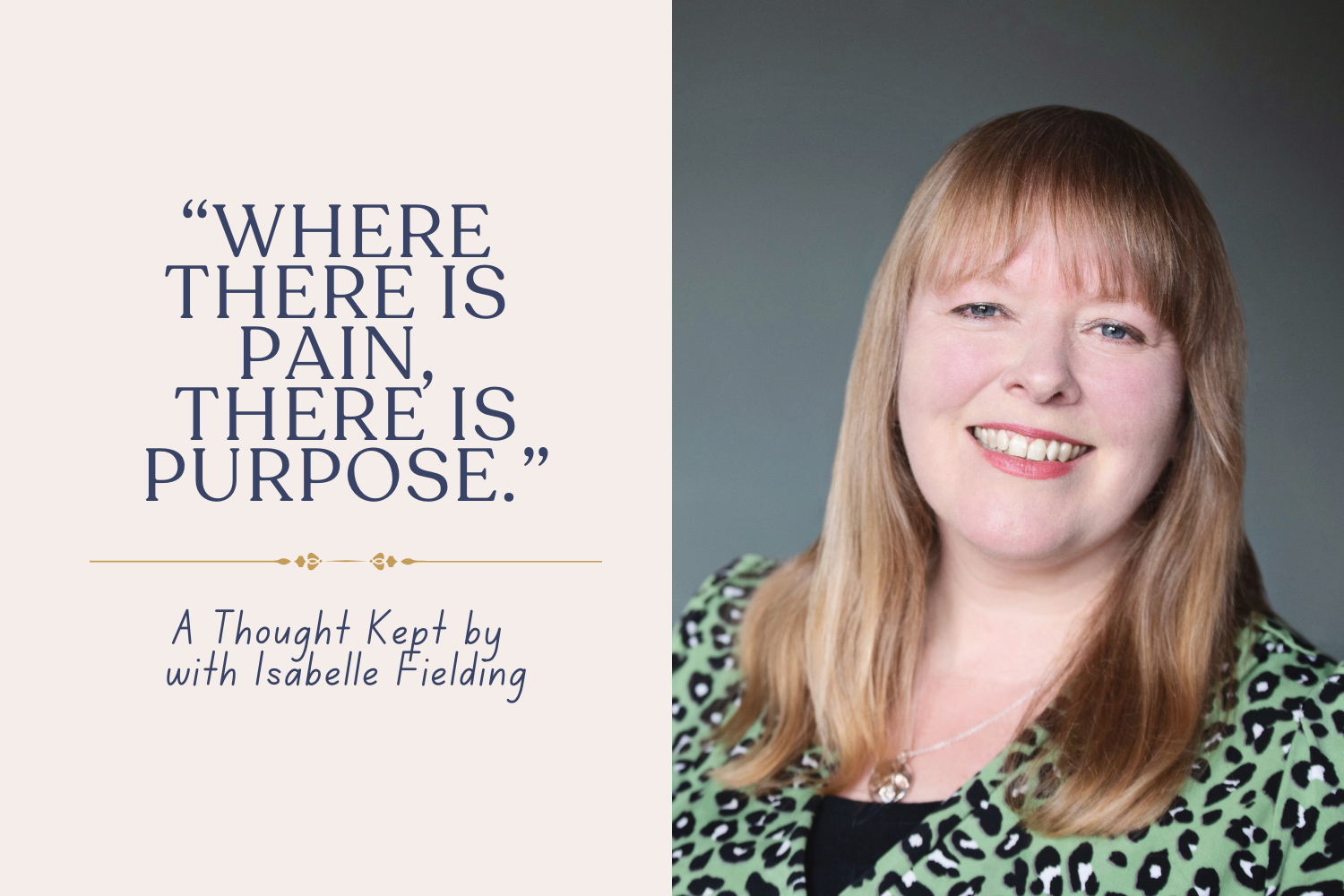
This question sat at the heart of a recent conversation on our podcast A Thought I Kept, with Isabelle Fielding. Isabelle works with individuals and organisations navigating change and uncertainty, and her work is grounded in a simple but often overlooked idea: emotions are part of being human, and learning how to relate to them is a skill — not a personality trait.
One of the key ideas Isabelle shared was this: Where there’s pain, there’s purpose. Not pain as something to glorify or push through, but pain as a signal. An indication that something matters, that a value is being touched, that attention is needed.
For many people who arrive here feeling lost, this is already a reframe. Because when emotions feel uncomfortable, our instinct is often to control them, deny them, or move away from them as quickly as possible. We tell ourselves we shouldn’t feel this way. We judge the feeling. We add a second layer — frustration, shame, self-criticism — on top of the original emotion.
Very quickly, things escalate.
Isabelle spoke about how emotions often stack like this. You feel anger, then feel ashamed of feeling angry. You feel anxious, then criticise yourself for being anxious again. Before long, it’s hard to know what you’re actually feeling — just that it’s too much.
Handling emotions better doesn’t mean stopping that first feeling from arising. It means learning how not to pile everything else on top.
In the conversation, Isabelle used an image that makes this easier to picture. Imagine being in the sea, trying to hold a beach ball underwater. It takes constant effort. Your arms ache. And eventually, no matter how determined you are, the ball bursts back to the surface — often catching you off guard. That’s what it can be like when we try to suppress or ignore our emotions. They don’t disappear; they resurface later, often louder and harder to manage.
A more sustainable approach is to let the ball float.
To allow emotions to be present without pushing them away — but also without letting them take over. Isabelle described this as learning to carry emotions lightly, rather than holding them right in front of your face. They’re there, but they don’t get to drive every decision.
This is where handling emotions becomes less about control and more about relationship.
Instead of asking, How do I get rid of this feeling? we might ask, Can I notice this without being overwhelmed by it?
Instead of assuming emotions make us unreliable, we can start to see them as information — not instructions.
Anxiety might be signalling uncertainty that needs time. Frustration might be pointing to a boundary or a mismatch. Self-doubt often appears where we care deeply about doing something well. None of these emotions tell us exactly what to do next but they can help us understand what’s going on inside us.
For people feeling lost, this can be grounding. Because it means you don’t have to wait until you feel calm, confident, or certain before you’re allowed to move forward. You don’t need to change who you are to begin handling things better.
Another important distinction Isabelle made was between experiencing an emotion and becoming it. Feeling anxious is not the same as being an anxious person. Feeling unsure doesn’t mean you can’t be trusted. Emotions are states — they come and go — even when they feel sticky or familiar.
Learning to handle emotions better often starts with noticing this difference.
It might mean pausing long enough to name what you’re feeling, without immediately reacting or analysing it. It might mean recognising when a second emotion — shame, irritation, self-judgment — has joined the first. It might mean allowing yourself to feel something without demanding that it resolve straight away.
This isn’t about emotional mastery. It’s about emotional steadiness.
At If Lost Start Here, we often talk about finding your footing rather than finding answers. About orientation rather than certainty. Learning to handle your emotions is part of how to navigate life. Not because emotions give you a perfect map, but because they help you stay connected to yourself as you move through change.
You may still feel unsure. You may still feel conflicted or overwhelmed at times. But handling emotions better doesn’t mean eliminating those experiences — it means being less knocked off course by them.
And that can make a real difference when you’re trying to move forward gently, in your own way.
If you’d like to explore this further, the full conversation with Isabelle Fielding is now available on our podcast A Thought I Kept.
And if you’re feeling lost or unsure and want support in understanding and handling your emotions, explore our coaching sessions.
The Thoughts That Stayed When the Year Felt Hard
A gentle end-of-year reflection drawn from A Thought I Kept — thoughts that helped when life felt overwhelming, uncertain or hard to navigate.
Some years are easy to summarise.
They arrive with neat headlines: “the year everything changed”, “the year it all came together”, “the year of big decisions".
And then there are the other years. The ones that feel harder to pin down.
This has been one of those years for many of us.
A year where you might not have clear answers. Where you feel more tired than triumphant. Where you’re still carrying questions about work, identity, relationships, or simply how to feel okay in the everyday.
When we started the podcast A Thought I Kept, we weren’t looking for big breakthroughs or polished wisdom. We asked a much simpler question:
What’s the thought that stayed with you — when everything else fell away?
As the year draws to a close, those are the thoughts we keep returning to. Not because they fixed everything, but because they helped us navigate life just that little bit better.
Here are some of the ideas that stayed — especially when the year felt heavy, overwhelming, or uncertain.

When Thinking Harder Wasn’t the Answer
One of the strongest threads running through this year’s conversations was the idea that clarity doesn’t always come from effort.
In our conversation with Katie Driver, we talked about how thinking clearly often begins with paying attention, not pushing for solutions. That sometimes the most helpful question isn’t “What should I do next?” but “What am I noticing right now?”
For anyone ending the year feeling mentally overloaded, this idea might help you create space for, rather than force, clarity.
That might look like fewer inputs. Quieter mornings. Walking without headphones. Letting your thoughts arrive without interrogating them.
When life feels hard, this kind of attention can be grounding — a way to feel less lost without needing a map.
Listen to the episode with Katie Driver on A Thought I Kept.
Learning to Trust Yourself Again (Slowly)
Another thought that stayed came up in conversations about self-trust.
Not the confident, decisive version of self-trust we often imagine — but a quieter kind. The kind that grows when you stop overriding yourself.
Several guests spoke about moments where they realised they had been ignoring their own signals for years: exhaustion, resentment, numbness, restlessness. And how wellbeing didn’t begin with adding more practices, but with listening.
If this year left you feeling unsure of yourself, this matters.
Self-trust isn’t rebuilt by grand declarations. It’s rebuilt in small acts:
pausing before saying yes
noticing what drains you
letting your feelings be information, not obstacles
That idea alone — my feelings are trying to tell me something — was one many of us kept.
Explore episodes on emotions, attention and self-trust wherever you listen to A Thought I Kept.
Overwhelm Isn’t a Personal Failure
Overwhelm came up again and again this year. Not as something to eliminate, but as something to understand.
In conversations about work, creativity and leadership, guests reflected on how overwhelm is often a signal that our systems — not our selves — need adjusting.
If you’re ending the year feeling overwhelmed, anxious or behind, this thought matters:
Overwhelm isn’t proof you’re failing. It’s information that’s pointing to too much noise, too many expectations, too little rest, or too little support. And noticing that is already a form of progress.
This is especially important at the end of the year, when reflection can quietly turn into self-criticism. These conversations reminded us that kindness — toward ourselves — is not a soft option. It’s a stabilising one.
You Don’t Need to Fix the Year to Learn From It
One of the most reassuring ideas to come out of the podcast this year was this:
You don’t need to tidy the year up to take something meaningful forward.
You can let it be unfinished.
Many guests spoke about learning through living, not through tidy conclusions. About carrying insights forward even when situations hadn’t resolved.
For anyone feeling lost or disconnected right now, that’s an invitation to stop forcing meaning — and trust that some understanding unfolds later.
Sometimes the thought you keep doesn’t explain everything.
It simply keeps you company.
Keeping these Thoughts Close
As we reached the end of the year, we realised something else: these ideas are easy to forget when life gets loud again.
That’s why we gathered the thoughts that stayed into a printable poster designed by Amanda — a way to live with them, not just read them once. Something to glance at on a difficult day. Something to remind you that you’re not alone in these questions.
You can shop the printable poster here — a collection of thoughts kept from the first year of A Thought I Kept.
And if any of these reflections resonated, we’d love for you to explore more.
Listen to A Thought I Kept — conversations about wellbeing, emotions, work, identity and self-trust, because when the year feels hard, sometimes the most helpful thing isn’t a plan — it’s a thought worth keeping.
Feeling Held in a World That Keeps Asking for More
Exploring overwhelm, anxiety, and what it means to feel held — especially when you’re carrying too much and don’t know how to slow down.
There’s a particular kind of overwhelm that doesn’t come from doing too much — but from holding too much.
Holding work.
Holding family life.
Holding emotions, expectations, plans, worries.
Holding it all together, often quietly.
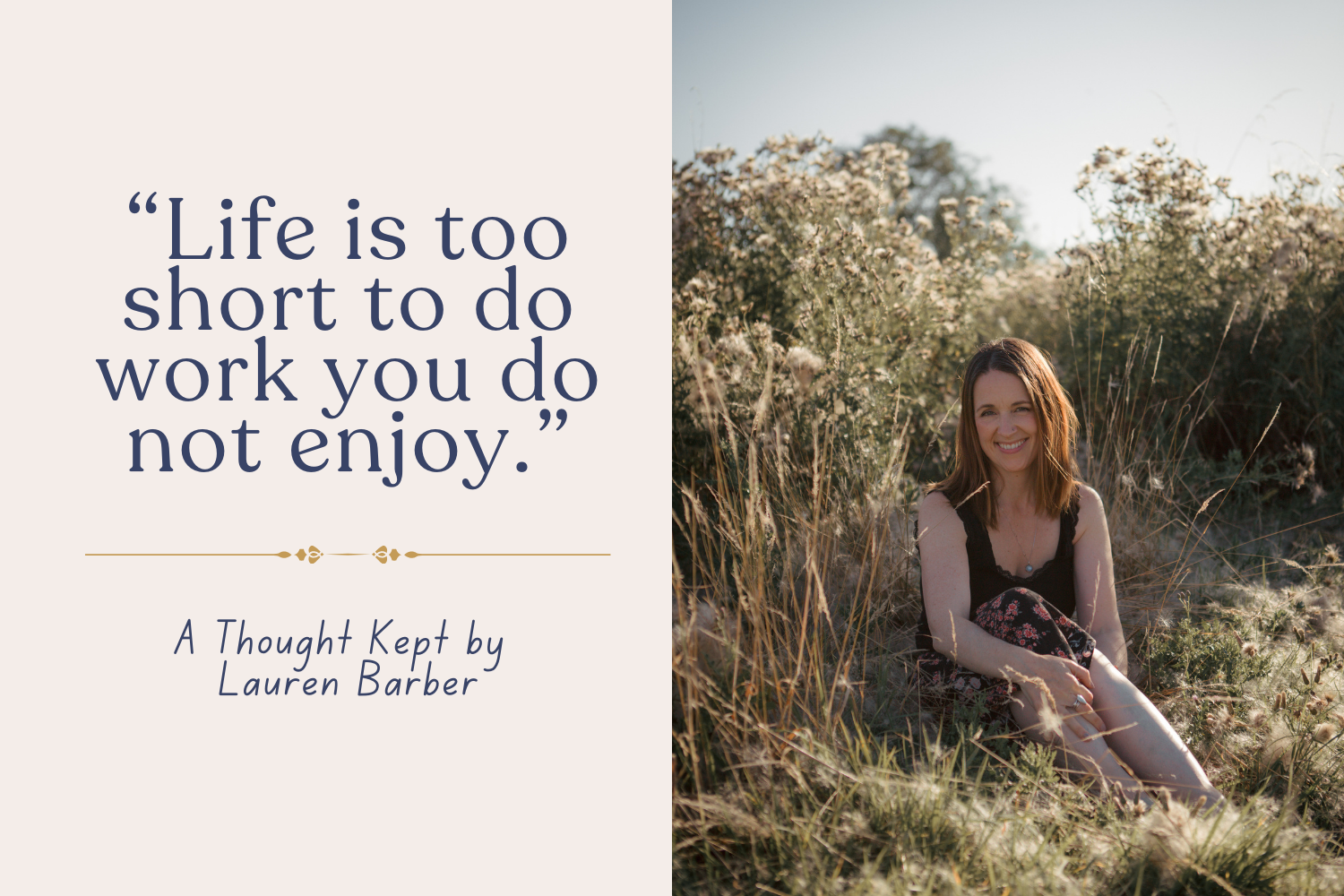
It’s something that came up again and again in my recent conversation with Lauren Barber on the podcast A Thought I Kept. We didn’t set out to talk about overwhelm directly, but as we spoke, it became clear that this sense of being unheld — of carrying more than feels sustainable — sits beneath so many of the feelings people describe as stress, burnout, anxiety, or simply feeling lost.

What does it mean to feel held?
When we talk about being held, we often imagine something external: support from others, community, care, someone stepping in. And that matters — deeply. But Lauren spoke beautifully about another layer of holding too: the ways we hold ourselves when life keeps asking for more than we feel we have to give.
In the episode, she shared how anxiety has been a long-term companion for her — not always loud or dramatic, but often living quietly in the body. In the gut. In the mornings. In the constant background hum of hypervigilance. That feeling of being alert even when things are technically “fine”.
What struck me was how she described mistrusting good feelings. How, when you’ve spent a long time braced for difficulty, calm can feel unfamiliar — even unsafe. Ease doesn’t always land as relief; sometimes it lands as something to be suspicious of.
Many of us recognise this, especially when we’re overwhelmed. We might know what would help — rest, space, gentleness, support — and still struggle to let ourselves receive it.
Overwhelm isn’t always about doing too much
One of the ideas that stayed with me from this conversation is that overwhelm isn’t always about volume. Sometimes it’s about imbalance.
We’re holding a lot — but not being held in return.
Lauren talked about motherhood as a clear example of this. There are things in life that drain us simply because they have to be done. Meals, logistics, care, responsibility. We don’t always have the option to step away from them. And in those moments, the question isn’t “how do I escape this?” but “how do I support myself within it?”
Lauren spoke about counterbalancing — about finding small, everyday ways to bring nourishment back in. Not as a fix to the problem we can’t yet get to, but as a quiet form of care.
Putting music on while making breakfast.
Going for a walk, even when it’s inconvenient.
Wearing a favourite pair of earrings on an ordinary day.
These aren’t grand gestures. But they matter. Because they help the body feel a little safer. A little less alone. A little more held.
The quiet cost of never being held
So many people we speak to at If Lost Start Here tell us they feel disconnected — from themselves, from their energy, from what they want. Often, that disconnection isn’t because they don’t care, or don’t know. It’s because they’ve been holding so much, for so long, without anywhere to rest.
When you’re constantly in that state, your nervous system doesn’t get the message that it’s okay to soften. Even moments of rest can feel uncomfortable. Even joy can feel fragile.
Lauren shared how somatic practices — working with the body, not just the mind — have helped her rebuild a sense of safety from the inside out. Not by forcing calm, but by meeting what’s there with compassion. By learning, slowly, that feelings move. That sensations pass. That being held can be something you practise, not something you wait for.
Feeling held as a practice, not a destination
One of the most grounding ideas from this episode is that feeling held isn’t a one-time experience. It’s not something you achieve and then move on from. It’s a rhythm. A return.
It shows up in how you treat yourself when you’re tired.
In how you respond to anxiety rather than fighting it.
In whether you allow yourself small moments of care without earning them first.
This feels especially important at times of year when everything speeds up — when expectations multiply and space shrinks. When we’re told to reflect, plan, connect, celebrate, and keep going, all at once.
In those moments, being held might look less like changing everything and more like asking a quieter question: “What would help me feel supported right now?”
Work, energy, and being held
At the heart of Lauren’s story is a thought she’s carried since her early twenties: “Life is too short to do work that you do not enjoy.”
Lauren spoke about learning to notice when her work drains her energy — when she feels flat, depleted, disconnected. And how those sensations have become signals rather than something to push through.
For many people, changing work isn’t immediately possible. But even then, the episode offers a gentler invitation: to notice where energy is leaking, and where it might be replenished. To bring more of what you need into your days, even when the structure stays the same.
Feeling held, in this sense, is about staying connected to yourself — even in imperfect conditions.
A gentle invitation
If you’re feeling overwhelmed, unheld, or quietly disconnected right now, you’re not failing. You’re responding to a world that often asks for more than it gives back.
My hope is that this conversation with Lauren offers a pause. A moment of recognition. Perhaps even a small sense of being held — enough to help you take the next gentle step.
Listen to the full episode of A Thought I Kept: How We Learn to Feel Held with Lauren Barber — available on Spotify, Apple, or wherever you listen to podcasts.
And if you’d like more thoughtful reflections, tools, and ideas for everyday life, especially for those moments when you feel lost or overwhelmed, join our mailing list. You don’t have to hold everything alone.
The Thought That Changed How I End the Year
End the year with more clarity and less pressure. Discover one powerful question to reset your mind and start the new year with intention
Every year around this time, I feel a quiet tension building.
It’s not just the pressure to finish things, though that’s part of it — the projects left undone, the goals half-met. It’s something deeper. A low-grade noise, humming underneath the productivity tools and Pinterest-perfect vision boards.
That voice that says:
“You should be reflecting.”
“You should be setting goals.”
“You should be figuring out how to make next year better.”
And often, if I’m honest, I try to oblige. I sit down with the journal. I make the lists. I try to “get clear.”
But I don’t always feel clear. I just feel… tired.
So this year, I’m trying something different. Something softer.
And it started with one sentence from a conversation I had with coach and facilitator Katie Driver:
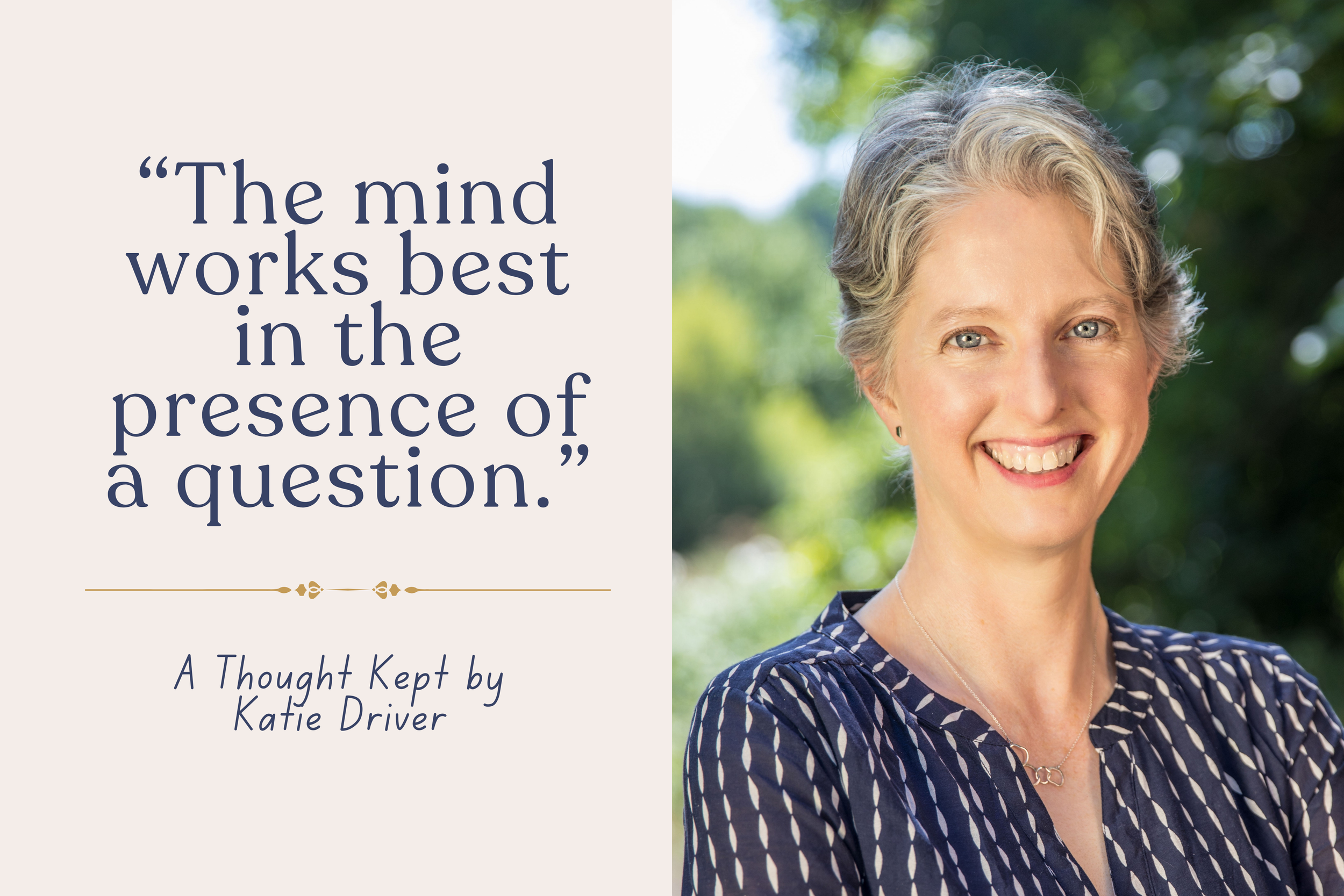
“The mind works best in the presence of a question.”
It landed so gently, I almost missed it. But the more I sat with it, the more it felt like a key — not just to better thinking, but to a better ending.

What if clarity doesn’t come from pushing — but from asking?
Katie’s work centers around helping people think for themselves — particularly those who feel like their minds are “buffering” or stuck in mental noise loops. In our episode of A Thought I Kept, she talks about the value of attention, the importance of quiet, and what can shift when we stop trying to force insight, and start trusting the questions.
As someone who has historically tried to think my way to control — to logic, list-make, or out-journal the overwhelm — this idea felt like an exhale. What if I didn’t need the answer yet? What if I didn’t need a 12-step plan? What if I just needed the right question?
So I tried one.
The question that helped me end the year differently
On a particularly messy-feeling day, I sat down with this:
What would make this a good ending — for me?
Not a successful one. Not a productive one. Not an impressive one.
A good one. For the person I actually am.
And quietly, without fanfare, an answer rose:
Letting go of something I never really wanted.
Finishing one small thing I care about.
Taking a walk in silence, no headphones.
Choosing presence over performance.
Not exactly a 10-point strategic vision. But honest.
True. Grounded. And — perhaps most importantly — doable.
Another question I’ve come to love:
“What do I need right now?”
It’s one Katie shared in the episode, and I’ve returned to it often.
When the list is long. When my brain feels foggy. When I’m tempted to sink into distraction instead of meeting myself gently.
Sometimes the answer is small — a cup of tea, a stretch, a text to someone I love. Sometimes it’s “nothing right now.” But just asking reminds me I have needs, and they’re worth listening to.
In a season that often prioritizes output — what did you accomplish, what are you planning next — this simple question helps me reorient inward. To listen. To care. To remember that ending well isn’t always about tying everything up. Sometimes it’s about releasing what no longer fits.
A better ending is possible. But it starts with presence, not pressure.
So if you’re feeling behind or burnt out or like your brain is caught in a loop —
If you’re wondering how to reset without overhauling everything —
Here’s what I learned:
You don’t need to fix it all.
You don’t need to reinvent yourself.
You don’t even need to reflect perfectly.
You just need one honest, open question.
And a little space to answer it.
Listen to the episode: What to Do When You Can’t Think Straight with Katie Driver
And if you need the space to think then explore our online and in-person coaching sessions. You can still book for the end of this year, or get a session in your calender for the start of 2026.
How to End the Year with Intention (Before the New One Begins)
December doesn’t have to be a sprint to the finish line. Here's a slower, more intentional way to reflect on the year behind you and quietly begin the next one with clarity and care.
December is often framed as a finish line: A final push. A test. A moment to evaluate everything and rework yourself before the clock strikes midnight. But what if we made space for something different?
What if the end of the year wasn’t a judgment point but a waypoint?
A natural pause to notice, gather, and begin again, without rushing?
This isn't though about anticipating resolutions. It’s more about recognising what this year asked of you and how you met it. It’s about taking stock of what mattered, what’s changed, what still hurts, and what you want to carry forwards (or quietly leave behind).
So here’s an invitation to end the year on your terms, whatever that means to you.

Step 1: Reflect Without the Pressure to Perform
This time of year can stir up all kinds of emotions — joy, grief, gratitude, burnout — often tangled together. So the first thing to do is simple:
Pause and notice. Instead of listing wins or judging what you “did enough of,” try asking:
What did I learn about myself this year?
Where did I feel most like me?
What surprised me, softened me, challenged me?
These are the kinds of reflections that grow self-trust, rather than self-criticism.
You could:
Write a “reverse bucket list” — things you experienced, even if small, that mattered
Map your year by seasons or quarters and list one lesson or moment from each
List three things you coped with or made space for, even if they don’t “look impressive” on paper
Growth isn’t always visible. This is the season to witness it anyway.
Step 2: Begin Again Without Reinventing Yourself
January can come with a lot of noise. New habits. Fresh starts. Big goals. But most meaningful change is quiet and ongoing.
So instead of asking, “What do I need to fix about myself?”, try this:
What do I want to protect, grow, or honour more in the year ahead?
A few questions that can help:
What helped me feel steady this year and how can I make space for more of that?
What small boundary, rhythm or mindset actually worked?
What’s something I’m curious about right now?
And one of our favourite ideas:
Choose a word — not as a resolution, but as a companion. Something that gently anchors your direction, without pressure. Words like ease, play, curiosity, rooted, or enough can be guideposts.
Yours doesn’t need to be “clever”. It just needs to feel like a hand on your shoulder, reminding you of what matters.
Step 3: A Gentle Reflection Practice (That Won’t Overwhelm You)
If you’re unsure where to start, try this 10-minute reflection ritual:
→ Write a letter to yourself from the end of next year.
Write as if it's already happened.
What moments are you grateful for?
What did you let go of?
What surprised you in the best ways?
What would you thank yourself for doing (or not doing)?
This isn’t about setting fixed goals. It’s about listening to what your life might want to become.
You can keep the letter, hide it in a book, or revisit it this time next year.
Or Try This: Your End-of-Year Clarity Toolkit
If journaling isn’t your thing, try choosing one of the following prompts to explore this December — in a voice note, a walk, or a conversation with a friend:
What are you proud of that no one else saw?
What helped you come back to yourself this year?
What do you know now that you didn’t in January?
Where did your energy feel most alive and how can you follow that in 2025?
Sometimes clarity doesn’t come through strategy but through honesty.
When This Season Feels Tender
Not everyone loves this time of year. For some, December brings exhaustion. Loss. Isolation. Or the sense that you’re not where you “should” be.
So here’s your permission slip:
You don’t have to optimise December.
You don’t have to write a perfect wrap-up post or choose a guiding word.
You are allowed to be in progress — unfinished, unsure, still becoming.
A different year is coming. But you don’t need to earn it. You only need to arrive in it as yourself.
This year has already shaped you. You’ve likely grown in ways you didn’t expect. And the new year? It’s not a blank slate you have to earn — it’s just the next page.
Take what you need from this season. Leave the rest. You’re already enough to begin again.
Want to Step into the New Year With Support?
If you're ready to approach 2025 with more clarity, confidence, or simply a better relationship with yourself, I’m now opening up a small number of coaching spots for the new year.
This isn’t about fixing you. It’s about creating space to explore:
What you actually want next — beyond the noise
How to hold boundaries without guilt
How to reconnect with energy, meaning and emotional steadiness
And how to live your life in a way that works for you, not just around you
We’ll work at your pace, with tools and reflections tailored to you.
If that sounds like something you're curious about, you can read more here and book a free discovery call here or drop me a message with any questions.

How to Navigate Family Dynamics Over the Holidays
Family dynamics feeling complex this holiday season? Here's a gentle, hopeful guide to letting go of perfection, setting kinder expectations, and making room for real connection
There’s a certain story we can tell ourselves about the holidays. This year will be the one. We’ll have the perfect meal. Everyone will get along. No one will bring up that thing. We’ll laugh like they do in Christmas films, and finally feel close again.
But often, the holidays — for all their warmth and magic — come tangled in old patterns, invisible pressures, and quiet expectations.
You might find yourself trying to manage everyone’s emotions while keeping the potatoes hot. Or quietly hoping that a long-held tension will resolve itself over the turkey. You might feel yourself reverting into an old role: the peacemaker, the quiet one, the organiser, the emotional sponge.
If you’ve ever left a family gathering emotionally wrung out — you’re not the only one.

What If We Let Go of “Getting It Right”?
So much of holiday stress comes from trying to get it right — the food, the gifts, the mood, the timing, the conversations.
But here’s a gentle invitation: What if the goal this year wasn’t to get it right — but to stay connected?
Not just with others. But with yourself too.
Letting go of perfection doesn’t mean giving up. It means tuning in. Noticing where the pressure comes from. Asking yourself which expectations you're carrying that no one else even knows about.
Sometimes, the smallest shift — from performance to presence — can change everything.
Moments of Connection Can Be Tiny
Connection doesn’t need to look like a profound heart-to-heart over pudding (though if it does, enjoy it). It can look like:
Sharing a joke over a ridiculous board game
Helping someone peel carrots in silence
Noticing someone’s effort, and quietly appreciating it
Letting yourself enjoy the moment before everyone wakes up
The memories that stay aren’t always the ones we try to orchestrate. They’re often the ones that slip in sideways, like my own memory of preparing a turkey with my mum in our dressing gowns at 6am, before the rest of the house woke up. It was messy. It was quiet. It was ours.
From Reacting to Responding
Tricky moments happen. Comments that sting. Conversations that tip into familiar territory. We don’t suddenly become different people in December — we just add tinsel.
But when a family dynamic triggers something in you, here’s a gentle way to pause:
Ask: What’s really going on here?
What might this person be feeling or needing?
What’s the value behind their words — and the need behind mine?
Sometimes, even a second of curiosity can interrupt a pattern. You don’t need to fix it. But you can give yourself the gift of not spiralling. You can respond instead of react.
And remember: kindness doesn’t mean tolerating poor behaviour. It means creating enough space to see what’s really happening — and choosing how you show up in it.
Shared Care, Not Just Self-Care
We hear so much about self-care at Christmas. And while that's important, what if this season was also about collective care?
If you tend to carry the emotional weight of gatherings, ask yourself:
Who else could help hold this?
Could someone else bring dessert?
Could you share a game or ritual with a younger family member?
Could you start a new tradition where everyone brings a “Christmas surprise”?
One year, hot sauces at Christmas dinner created a hilarious (and bonding) moment I never saw coming. It wasn’t the tradition I’d planned. But it became a moment of unexpected joy.
Breaking Old Roles
The holidays have a way of putting us back into the roles we grew up with.
The fixer.
The entertainer.
The one who holds it all together.
What if you tried something different this year?
Saying no with kindness
Asking for what you need
Letting go of the need to smooth over every bump
Sometimes just naming the pattern out loud to yourself is enough to start loosening its grip.
What’s one old role or habit you could leave behind this year?
Noticing Joy (Without Forcing It)
Joy doesn’t always announce itself. It doesn’t always look like a glossy advert. It sneaks in — in the shared glance across the table. In the song that makes you tear up. In the silly game you weren’t going to play, but did.
If this year feels like a lot, give yourself permission to notice joy, not create it.
Before the gathering, ask:
What’s one moment I might enjoy?
What do I want to remember from this season?
Where might connection surprise me?
You Don’t Have to Fix Everything
You don’t have to be the glue. You don’t have to keep every plate spinning.
If this is a hard year for you, emotionally or practically — know that’s okay too. The holidays bring up everything. The love and the loss. The joy and the weight.
And maybe this year, all you need to do is soften your grip.
To let things be a little less curated.
To let someone else stir the gravy.
To step outside for a breath before stepping back in.
Whoever you’re with this season — chosen family, biological family, or a patchwork of both — remember this:
You are allowed to be human.
You are allowed to set boundaries, to feel wobbly, to find joy in small places, to not have it all figured out.
And you are allowed to be loved and supported without having to hold it all alone.
Need a Little Extra Support?
If family dynamics are feeling overwhelming this season — or if you’re longing for more groundedness and calm — coaching could be a supportive space to explore it all.
Together, we can:
Make sense of your emotional patterns
Create gentler boundaries that don’t feel harsh
Reclaim what the holidays actually mean to you
Click here to learn more about coaching or book a free clarity call

How to Winter Well (Even If It’s Not Your Season)
Struggling with emotional burnout or winter blues? Discover how to winter well with gentle rhythms, cozy rituals, and a new way to care for yourself in the darker months.
I have never been a winter person.
I long for open skies, sunshine, warmth. Winter often feels like a long stretch of darkness and something to survive. Something to wait out until spring finally arrives and everything starts to bloom again.
But lately, I’ve been asking myself a different question:
What if winter isn’t something to get through?
What if it’s something to be in?
And even — if we’re open to it — something to learn from?

Winter as a Season of Pause
We live in a world that rarely pauses. Even in the darkest days of the year, we’re expected to produce, perform, plan, and push through. But what if winter is offering us something else entirely?
What if it’s asking us to slow down not because we’re “weak” but because we really need to.
For me, learning to winter well has meant stepping away from the pressure to “keep going” at all costs, and learning instead how to listen. To rest. To accept that being in a quieter season of life doesn’t make me less.
It just makes me human.
The Messy Middle (And Why You Don’t Need a Perfect Ending)
For a long time, I treated winter as the end of the year. A time to wrap things up, tie a bow on my life, and get ready for a clean start in January.
But what I’ve come to realise is that winter isn’t the end.
It’s the in-between.
It’s the space between what was and what’s coming. The quiet middle of the story. The time where not much appears to be happening and yet everything is quietly changing.
And there’s something liberating in that. Because it means we don’t need to have everything figured out. We don’t need to finish the year “strong.” We just need to keep going in our own way and at our own pace.
The Wisdom of Wintering
Katherine May, in her beautiful book Wintering, describes this season not just as a temperature change but as a way of being.
She invites us to see winter as a necessary season in all of our lives. Not just one marked by frost, but one defined by slowness, solitude, and surrender. A space where we allow things to fall away. Where we let our inner worlds recalibrate. Where we allow ourselves to stop striving.
This is an idea that I keep returning to:
Everything in nature knows how to winter.
Why shouldn’t we?
Trees drop their leaves and conserve energy.
Soil rests.
Animals hibernate.
The world turns inward — and trusts spring will come again.
Rest Is Not Laziness. It’s Wisdom.
Like many people, I find rest difficult.
I like doing. I like moving. I’ve spent most of my life thinking that energy and productivity were signs that I was doing life right.
But then came a health challenge that knocked me flat and I had to learn that energy is a resource. That rest is not just indulgence, but survival.
And winter, for me, has become a mirror of that lesson. It asks us to stop fighting our need for pause. To stop seeing stillness as failure. To stop expecting ourselves to be blooming all year round.
Making Peace with Quiet
Here’s something I’ve noticed about winter: it asks us to sit in the quiet. And that’s not always comfortable.
But the quiet isn’t empty. It’s full of possibility.
Therapist Julia Samuel talks about the fertile void — a period where things look empty on the surface, but underneath, growth is happening. That’s winter. A time where what’s growing is invisible, but no less real.
If you’re in that space right now — the uncertain middle, the undefined stretch know that you’re not lost. You’re just wintering.
Connection Still Matters (Especially Now)
Winter can feel isolating. We stay in. We cancel plans. We disappear behind closed doors.
But those small moments of connection — they still matter.
Sometimes they’re the thing that get us through.
A friend who sends a voice note.
A neighbour who pops by with cookies.
A candlelit dinner where no one wears sequins and everyone brings a story.
Wintering well doesn’t have to mean withdrawing completely. It can mean choosing gentle connection over performance. Intimacy over expectation.
Your Wintering Toolkit (Small Things That Matter)
Here are some of the things that are helping me stay grounded this season:
The Daily 3-2-1: Three things I’m grateful for. Two things I’m curious about. One way I can make today easier.
A candle in the kitchen while I cook.
Woollen socks and a hot water bottle at my desk.
A therapy lamp by the window.
A stack of books that feel like comfort.
The sound of nothing. (Or of my family laughing.)
These aren’t revolutionary. But they’re enough to anchor me. And that’s what wintering well is about — enough.
A Different Kind of Self-Care
This time of year, we’re flooded with messages about self-care. But often, it ends up sounding like a shopping list of scented candles and self-help guides.
What if self-care in winter meant not doing more, but doing differently?
What if it meant:
Choosing quiet over hustle
Letting go of one tradition that drains you
Making space for rest, without apology
Listening to what your body (and your soul) actually needs
A Gentle Prompt for You
Here’s what I’m asking myself this winter:
What does it look like to winter well, just for me?
What if that doesn’t mean fixing anything, achieving anything, or even feeling festive?
What if it simply means honouring this season for what it is — and who you are in it?
If You’re Looking for Support This Winter…
Wintering doesn’t mean you have to go it alone.
If this season is bringing up emotional burnout, loneliness, fatigue or a longing to rest but not knowing how — this might be a beautiful time to explore support through coaching.
Together, we can:
Create space for your real needs
Gently navigate grief, fatigue, or burnout
Make winter more livable — maybe even quietly beautiful
Click here to explore coaching. Or book a free 20-minute consult to find out what you’re looking for.
You Don’t Have to Love Winter
You don’t have to fall in love with snow, or embrace darkness like it’s a friend.
But you can learn to live well inside the season you’re in.
And that, in its own way, is enough.
So here’s to this winter.
To quieter mornings.
To softer evenings.
To connection and coziness and not having to bloom right now.
Here’s to wintering well — in whatever way that looks like for you.
How to Navigate Emotional Burnout and Overwhelm This Festive Season
Feeling emotionally overwhelmed during the festive season? Discover gentle, practical ways to navigate burnout, disconnection, and all the feelings this Christmas. A holiday survival guide for all your festive lost moments.
(…Without Numbing, Pretending, or Putting on the Paper Hat if You Don’t Want To)
The holidays are meant to be magical, right? Twinkling lights. Glorious food. Time with the people you love. Except… that’s only part of the story.
For many of us, this season also brings up a messier mix of emotions: Burnout. Resentment. Grief. Overwhelm. Emotional exhaustion that feels like it should be packed away until January, but only grows louder under all the glitter.
You may be doing everything you’re “supposed to,” and still feel off. Many of us can feel like we’re just hanging on through the Holiday Season even though we’re trying to reach for all the magic it might also bring.

The 12 Emotions of Christmas (And Then Some)
The Holiday Season can bring with it so many different feelings. There’s joy, of course. Gratitude? Hopefully. But also: guilt, loneliness, hope, anxiety, peace, nostalgia, resentment… and grief. Especially grief. And often we might be feeling more than one thing at once.
You can be excited and exhausted.
Grateful and slightly ragey at your partner for leaving all the wrapping until Christmas Eve.
Full of love and lonely at the same time.
Emotions Don’t Need Fixing. But They Might Want Witnessing
Here’s what we’ve learned (and what the science backs too): Trying to force yourself to feel festive—or calm, or joyful—only adds to the emotional load.
What helps more? Small, doable practices that honour your reality and softens the pressure.
We’re not aiming for unloading everything all at once. Rather we’re trying to bring in some more relief and permission, creating an emotional anchoring when things feel all over the place.
Gentle Practices to be Kinder to What You’re Really Feeling
These are things that hopefully you can return to when you need a moment of clarity, calm or care.
1. Name What You’re Actually Feeling
Instead of shoving it down, try this:
“Right now, I feel overwhelmed because I’ve said yes to too many things.”
Naming emotions helps regulate them. It brings clarity when everything feels a bit loud.
2. Validate What’s True for You
You don’t need to justify your emotions. They're not wrong or bad.
They're simply information.
Loneliness? Telling you that connection matters.
Guilt? A sign you care deeply.
Resentment? A flashing light that a boundary might need adjusting.
3. Reframe, Gently
Not toxic positivity. Just a reframe when you’re ready.
Instead of “I’m failing at Christmas,” try “I’m doing my best with what I have this year.”
Instead of “Why can’t I just enjoy it like everyone else?” try “Joy looks different for everyone. I’ll find mine.”
4. Create Tiny Moments of Joy on Purpose
Not performative, curated joy. But real, quiet joy.
A trashy Christmas movie you secretly love.
A warm drink savoured in silence.
Singing badly with someone you love.
We’ve found that joy is an active practice, rather than a finely crafted outcome.
5. Let Overwhelm Be Your Messenger
Instead of pushing through, ask:
What’s one thing I can take off my plate today?
What’s one thing I could hand to someone else (even if it’s not “perfect”)?
How can I pause, even for a minute?
6. Talk About Grief, Don’t Tiptoe Around It
Grief doesn’t go quiet at Christmas—it often shouts.
Whether it’s someone you’ve lost, or the version of life that isn’t yours anymore, it matters.
Light a candle. Say their name. Let others know it’s okay to mention them too.
This keeps their love in the room, not hidden away.
7. Let Peace Be a Practice, Not a Destination
Peace isn’t always a big revelation.
Sometimes, it’s three minutes of stillness while your tea brews.
It’s stepping outside and noticing the cold but not in the way that makes you want to cry.
It’s a single quiet carol, in a room filled with noise.
Look for peace in micro-moments. That might be enough.
What’s One Emotion You’re Carrying This Season?
What’s showing up for you—joy, grief, gratitude, anxiety, excitement, resentment, or something else entirely?
Because once you name it, you can work with it. And if you’d like support doing that…
Ready to Feel Better This Season? We Can Help.
Our 1:1 emotions coaching sessions are gentle, grounded, and always tailored to you. This isn’t about fixing everything. It’s about finding what might help you feel even just a little bit better, right now.
Whether you’re navigating grief, burnout, or just can’t hear yourself think
Whether you want support this season or to start the new year with a steadier emotional toolkit
Let’s start there.
Book a free 15-minute clarity call or explore our coaching options here.
This season, you don’t need to perfect it. You don’t need to perform it. You just need to be in it—honestly, gently, fully.
Make space for all the feelings. And give yourself the gift of not having to carry them alone.
Navigating Grief When It Doesn’t Look How You Thought It Would
Discover a gentler, more human way to navigate grief — especially when it doesn’t look the way you thought it would — with Georgina Jones, founder of The Grief Disco
What does grief look like?
If we’re honest, many of us have a picture in our minds. Tears. Silence. Perhaps someone wearing black, speaking softly, saying “I’m fine” when they’re clearly not. Or maybe someone who’s angry, messy, falling apart. We expect grief to look dramatic — or dignified — but either way, we expect to recognise it when it arrives.
So what happens when it doesn’t look the way we thought it would?
What happens when we’re grieving and we’re… still functioning? Still laughing? Still showing up for the school run? Or what if we can’t cry but know we’re holding something enormous inside?
And what if someone else is grieving and we misjudge them, because we think they should be more upset, or more together, or more like us?
That’s the quiet heartbreak of grief: not only the loss itself, but the confusion about how it’s “meant” to be.

In a recent episode of A Thought I Kept, I spoke to Georgina Jones, founder of The Grief Disco — a woman whose work lives at the intersection of grief, music, dance, and joy.
Her story challenged so much of what we think we know about grief. Georgina lost her son in 2023, and has experienced what many would describe as profound, unimaginable loss. And yet, she dances. She laughs. She connects. She creates spaces where people can cry and dance at the same time.
It’s not about ignoring grief or sugar-coating it. It’s about making space for the full spectrum of it — especially when it doesn’t come wrapped in the behaviours we’ve been taught to expect.
Georgina spoke about how grief lives in the body. That there are things music can unlock that words can’t reach. That sometimes we can be sobbing and laughing in the same breath. And that joy isn’t something that betrays grief — it’s something that supports it.
What struck me most was this: grief doesn’t always look the way we think. And that misunderstanding can create more pain, not just for the person grieving — but for those around them, too.
We’ve inherited a lot of strange stories about how we’re supposed to grieve.
We think:
Grief has “stages” (it doesn’t — it has cycles, spirals, waves).
It’s meant to be quiet and tearful — or explosive and visible.
There’s a right way to do it.
It’s only valid if someone has died.
It ends.
But grief is far more expansive than that. It can be:
The silent, confusing ache after a miscarriage no one knew about.
The slow unraveling of identity in a job or relationship loss.
The anticipatory grief of watching someone change before they’re gone.
The quiet guilt of feeling relief — and wondering what that says about you.
And crucially: grief doesn’t always look “sad”.
You might feel numb. Or angry. Or completely disconnected. Or wildly creative. You might crack jokes at a funeral, or scream into your pillow a year later when you least expect it. That’s grief too.
So how do we navigate grief — especially when it surprises us?
Here’s what I’m learning, from Georgina and others, and through the work I do in emotions coaching:
1. Let go of the script
There is no one way grief should look. There is only the way it shows up in you. That’s enough. And it’s valid — even if it makes no sense.
2. Name what’s true
Maybe you’re grieving someone still alive. Maybe you’re mourning a version of yourself. Maybe you feel like your grief isn’t “big enough” to count. It does count. Language helps. Start with small truths. “This is hard.” “I feel strange.” “I miss something I never really had.”
3. Move it through the body
Grief isn’t just cognitive — it’s visceral. Breath, movement, music, crying, stillness — these aren’t indulgences. They’re how your body integrates the experience. As Georgina said, “We are so heady. But there is so much knowledge in the body.”
4. Let joy have a seat at the table
Joy doesn’t replace grief. It companions it. Finding joy again isn’t a betrayal of your sadness — it’s part of what sustains you. You’re allowed to laugh. To sing. To dance. Even while you’re broken-hearted.
5. Ask for support from someone who gets it
You don’t have to figure this out alone. Talking to someone trained in emotional literacy, regulation, and compassionate witnessing can help you feel seen — especially when your grief doesn’t look “typical.” That’s what emotions coaching is for.
Grief doesn’t come with a rulebook. But it can come with support.
If this resonates with you — if your grief feels different, or hard to name, or hard to carry — I’d love to invite you to:
Georgina shares her story of loss, joy, dancing through grief, and why your energy — even in the darkest moments — is your currency.
If you’re navigating something tender, tangled, or hard to name — this is the space for you. Emotions coaching is not about fixing you. It’s about helping you meet what’s here with more understanding, care, and clarity.
You don’t have to go it alone.
And your grief doesn’t have to look like anyone else’s.
If You’re Self‑Cared‑Out: How to Move from Doing to Being Seen
Feeling disconnected, overwhelmed or stuck in the self‑care loop? Discover how self‑advocacy, emotional health and receiving care can bring meaningful change.
You’ve done the rituals — the colouring‑in, the bubble bath, the breaths, the affirmations. And yet, you still feel drained.
In a recent conversation on A Thought I Kept, I asked psychologist and author Suzy Reading: “What is the one thought you have kept?” Suzy’s answer: “I am someone worth caring for.” And in that simple sentence lies the pivot many of us need — from checking the self‑care box to stepping into the kind of care we might be missing.

1. The Self‑Care Loop: When Doing Becomes Disconnection
Suzy begins the conversation by admitting that it was a “very dreary Friday” and she hadn’t had her usual morning walk to clear the jangly energy. Yet here she was, making space for the conversation and acknowledging the discomfort.
“I’ve got some jangly energy going on too … but you know, we make space for it and it’s all right for it to be here.”
That’s the thing. We often rush into another self‑care “thing” to fix the feeling, rather than giving ourselves permission to simply have the feeling.
If you’re someone who’s been doing self‑care, but still feels numb, overwhelmed or disconnected, consider this: maybe it isn’t more rituals you need — but a different relationship to care.
2. Worthy of Care: The Thought that Changed Everything
At its core, Suzy’s inquiry reveals something many of us never gave ourselves permission to believe: I am someone worth caring for.
She traces that thought back to her late teens and how it’s marks key turning points — a knee injury in her competitive ice‑skating days, becoming a mother, losing her father.
In each, the practice shifted from “perform better” to “treat myself as though I’m worth care” because, as she said:
“If you don’t do that, you’re not going to be here anymore.”
For those feeling burnout, disconnected or emotionally exhausted — the very phrase says this: you do not have to wait until you’ve earned care. You are already worth it.
3. The Barrier: Selflessness, “Not‑Enough”, and Silence of Needs
Why is this so hard? Suzy outlines layers upon layers of cultural messaging:
A “good baby” is one who doesn’t cry. How does that shape how we regard feelings?
A “good child” is one who doesn’t question adults. How does that influence advocating for ourselves?
Women especially carry messages of being selfless, resilient, productive, grateful. In the process our feelings and needs become invisible.
“You mustn’t be selfish. You must be selfless… our own personhood, turning attention inwards … feels shame‑inducing.”
So if you feel lost, exhausted, invisible — it might be less about you doing more and more about you giving yourself permission to need and receive. The blankness you feel might be the space where your needs weren’t asked, seen or met.
4. Self‑Advocacy: The Relational Layer of Self‑Care
Here’s where it deepens: self‑care is not just about self‑soothing or solo rituals. Suzy gently expands it to include receiving care and asking for what you need.
She offers real, grounded advice:
Practice asking with “safe people” first.
Instead of “I don’t mind where we go,” say “Here’s a place I’d enjoy. What about you?”
Be clear: “I feel unappreciated and taken for granted. Would you help me?"
For anyone feeling disconnected — this is an invitation to turn invisible needs into visible requests. To start the conversation with yourself and others. To move from surviving to being supported.
5. Overwhelm, Midlife & the Invitation to Receive
If you’ve been pushing through for years, if you’re mid‑life and your body is starting to whisper (or shout) “slow down”, you might realise the old methods aren’t working. Suzy shares:
“I could muscle my way through anything … until my body said sweetheart you cannot just railroad and muscle your way through everything.”
And so we pivot. We honour the winter seasons of life. We ask:
What have I weathered?
What do I need now?
Can I allow someone to help?
At the close of the episode, Suzy gives a simple but potent practice: every time you sip water (or tea, or whatever you have), place a hand on your heart and say: “I am someone worthy of care.” Use it as a daily touchpoint.
“Where am I at? What do I need?”
Because relational wellbeing isn’t a luxury, it’s a lifeline.
6. What You Can Do Right Now
If you’re reading this and you feel drained, disconnected or simply over it — try this:
1. Pause for one minute, put a hand on your heart and say: “I am someone worth caring for.”
2. Write down one need you have today. (No judgement.)
3. Make one gentle request from someone you trust. It could be: “Would you hold space for me for 10 minutes this week?” or “Could you help me with X so I don’t burn out?”
4. Listen to the episode of A Thought I Kept where Suzy and I unpack all this in vivid detail. (Link below.)
5. If you feel comfortable, share this page or the podcast with someone you trust — being seen is the other half of caring.
If Suzy’s thought — “I am someone worthy of care” — stirred something in you, our Coaching Sessions are here to help you gently unpack those feelings, reconnect with your needs, and practice the relational skills of self-advocacy.
Whether you're overwhelmed, self-cared-out, or simply seeking a safe space to feel seen, we’re here.

How We Cope: The Hidden Language of Emotions, the Body, and Self-Harm
Explore how emotional coping, self-harm, and nervous system regulation are deeply connected — and what it means to support ourselves and others with less fear.
We are taught to say “I’m fine.”
We are rarely taught to notice what we actually feel.
And almost never taught what to do with it.
This week on the podcast, I spoke with Beth Derry — resilience coach, Havening practitioner, and founder of Lovely Messy Humans — about one idea that changed everything for her:
“I'm bringing the realization that I had not actually that so long ago, still in my forties, about the sheer power that our nervous system has over every aspect of our life, our health, our happiness, our relationships, our work, and yet we have not talked about it. And when I started to learn about it and go deeper into it, it really changed everything.”
It made me wonder: What would our lives look like if we were taught nervous system literacy in school?
If we knew that emotional coping isn’t a flaw — but often a biological response?
If we stopped seeing anxiety, anger, or shutdown as personal failures… and started seeing them as signals?
When We Don’t Know How to Cope
When we don't understand our internal worlds — when we push away feelings, or panic in the presence of them — we disconnect. From ourselves. From others. From the cues that could help us come back to safety.
As Beth so gently shared, many of us live in the edges of our window of tolerance. We function. We show up. But we’re often one thing away from emotional overload. Or from total shutdown.
And in those spaces, we might turn to whatever makes the pain disappear.
Even if just for a moment.
Self-Harm and the Misunderstood Body
One of the most powerful parts of this conversation was Beth’s perspective on self-harm — especially among young people. A topic often clouded by fear, shame, or silence.
She explains that self-harm is rarely about wanting to die.
It’s often a desperate attempt to feel something, or regulate overwhelm.
A bid for connection. A tool of survival. A nervous system trying to find relief.
That reframing changed something in me. As a parent. As a coach. As a human who once believed that emotional intensity was a flaw to fix.
We talk a lot about mental health. But nervous system health? Still a gap.
And yet — it’s at the heart of how we process everything.
What I’m Taking With Me
Here are just a few shifts I’m sitting with after this conversation:
Emotions are messengers, not enemies. Every feeling we have — from anxiety to anger to disgust — evolved to help us survive. They’re not the problem. They’re trying to point us to one.
We don’t need to be experts. But we do need to get curious. Especially when we find ourselves spiralling, shutting down, or stuck.
Self-harm isn’t attention-seeking. It’s often connection-seeking. And our first response should always be: safety, gentleness, and holding the door open for conversation.
Talking therapy is powerful — but sometimes we need the body in the room. Beth’s work with Havening is just one example of how physical practices can help calm the nervous system and unlock healing in a different way.
For You, If You’re Feeling Lost
If you’re feeling emotionally full to the brim…
If you’re shut down and not sure how to begin again…
If your teenager seems unreachable…
Or if you simply want to understand why you react the way you do —
This episode is an invitation.
To move slowly.
To get curious.
To stop blaming yourself for feeling everything (or nothing).
To start gently noticing the signals your body has been sending all along.
Listen to this week’s episode: Lovely Messy Humans: Understanding Self-Harm, Emotional Coping, and the Nervous System with Beth Derry. Available now on A Thought I Kept
And if you need more support and understanding as you explore your emotional life, book one of our 1:1 online sessions.